You deposit your hard-earned paycheck in the bank. Do you go on a shopping spree with your credit card? Do you use the money to pay your debts from last month? Do you have enough to pay this month’s bills?
Often, Christopher Sneed encounters people who have no plan and no budget for their money.
“People work so hard for their money, but they are so carefree in how they spend it,” says Sneed, associate professor and consumer economics specialist in the UT Extension Department of Family and Consumer Sciences.
He admits to sometimes breaking his own budget, but he says creating a budget is a great place to start taking better care of your money.
“Every dollar has a purpose,” he says.
A unit of the UT Institute of Agriculture, UT Extension, with an office in each of the state’s 95 counties and statewide specialists with expertise in subjects ranging from large-scale farming to cooking at home and technology for teens, offers many programs related to financial literacy.
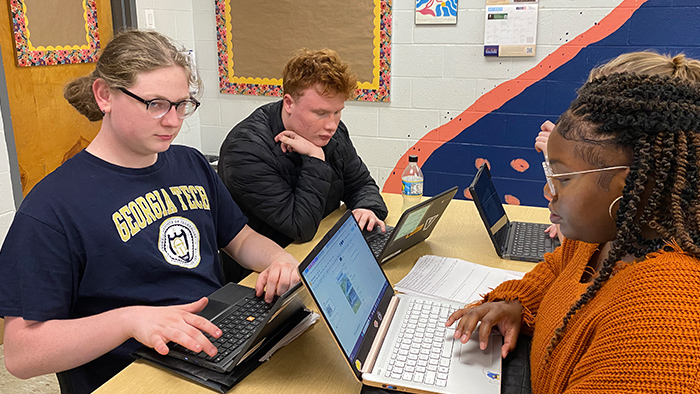
UT Extension is one of three providers authorized by the state to train public high school teachers to teach personal finance, a state graduation requirement since 2013. Through the personal finance course, high school students learn about setting financial goals and making financial choices, spending and saving and choosing a career as well as the more nuanced parts of the financial system such as taxes, insurance, budgeting, renting versus buying a home, banking, consumer protection, credit and debt, borrowing, identity theft and cryptocurrency.
Top Financial Challenges
Associate Professor of Family and Consumer Sciences Christopher Sneed and his colleague, Family and Consumer Sciences Professor Ann Berry, who oversees the high school teacher training, have devoted their careers to family economics and financial education. They have both been nationally recognized for their work. Berry won the 2021 Excellence in Education Award presented by the USDA’s National Institute of Food and Agriculture, Cooperative Extension and the Association of Public Land-grant Universities, and Sneed won the same award in 2025.
They recently asked UT Extension agents across the state to identify the top financial challenges they see facing Tennessee families.
- Lack of Emergency Savings: Many Tennessee families do not have an emergency fund. While experts recommend saving three to six months of living expenses, the most important step is simply to start saving, no matter how small the amount.
- Limited Awareness of Spending Habits: Many individuals are unaware of where their money goes each month. Tracking all expenses for at least one week each month, including small purchases like coffee, meals out, lottery tickets or pet care, can provide valuable insight and improve financial decision-making.
- Failure to Revisit Budgets Regularly: Budgets should be treated as flexible, living documents. As prices and household needs change, budgets should be adjusted accordingly. Regularly reviewing and updating spending plans ensures that they remain realistic and effective.
- Overextending on Housing Costs: Just because a lender approves a certain loan amount doesn’t mean it should be borrowed. A good rule of thumb is to keep total housing expenses around 30 percent of net income. Staying within this limit helps prevent financial strain.
- Increasing Fraud and Scam Activity: Fraud and scams have risen by nearly 38 percent in Tennessee over the past year. Individuals should remain vigilant, safeguard personal information and verify sources before sharing sensitive details or making payments.
- Rising Insurance Costs: The increasing cost of insurance is straining family budgets across the state. Comparing rates and shopping for insurance every two to three years can help families find the best coverage at competitive prices.
- Growth of “Buy Now, Pay Later” Programs: The popularity of “buy now, pay later” options has surged. While convenient, these programs can quickly accumulate and become difficult to manage. Use them sparingly and only when confident they can be repaid.
- High Reliance on Credit: Credit misuse leads to costly debt. Paying off balances in full each month helps avoid high interest charges.
- Underfunded Retirement Savings: Too many individuals delay saving for retirement. Contributing early and taking full advantage of employer matches can significantly improve long-term financial security.
- Lack of Family Involvement in Budgeting: Budgeting should be a family activity. Involving children in discussions about money builds awareness of the family’s financial goals and also helps shape responsible financial attitudes from an early age. For more financial literacy resources, visit fcs.tennessee.edu/money.
UT Extension also offers home-buyer education, money saving and budgeting, retirement and aging planning, workforce training, and even Pat’s Gameplan for caregivers of people with dementia.
Sneed oversees implementation of Money Week, which is funded in part by the Tennessee Financial Literacy Commission. Money Week for first and second graders started as a pilot program at Green Magnet Academy in Knoxville in 2021 and has since spread to about 30 counties. The money lessons are tied to literacy. The teacher reads a book such as You Can’t Buy a Dinosaur with a Dime! and introduces concepts like the value of money, counting currency, the difference between needs and wants, and spending and saving. Community leaders visit classrooms and read to children, who also get to take home a book and a newsletter of information for their parents or guardians.
On My Own is a one-day seminar on what to expect financially in the real world for high school juniors and seniors. Like the ups and downs of a game of Monopoly, students visit stations where they learn about bills they have to pay or sudden expenses needed in an emergency.
“In my perfect world, we’d have financial education in every grade and integrated in every subject. It is so critically important,” Sneed says. “Financial management is not just about money coming into the household. People with high salaries make bad decisions. You have to be deliberate in how you use those resources.”