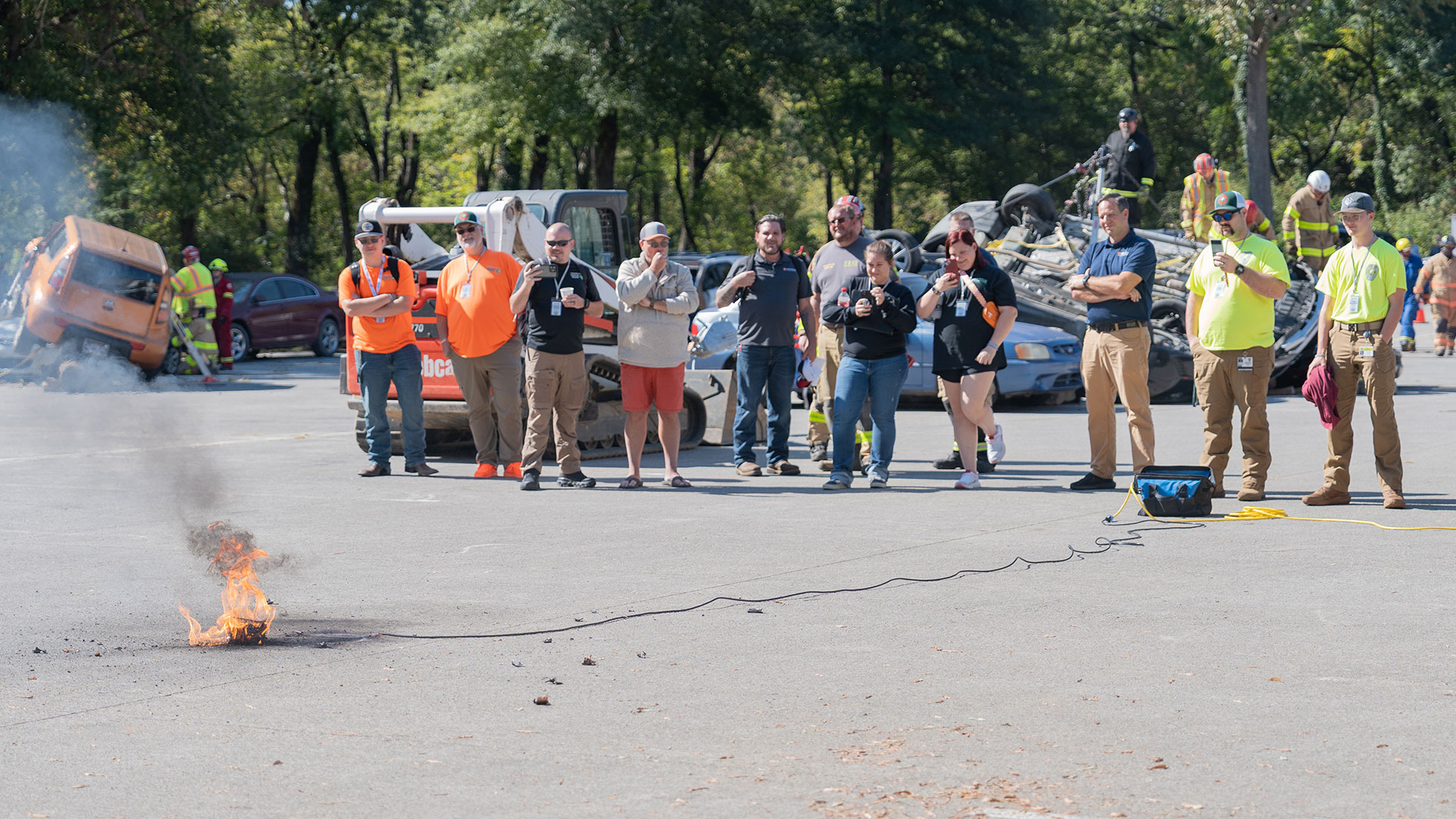
Lithium-ion batteries supply power to many of the devices humans depend on, including smartphones, tablets, laptops, e-bikes, smoke alarms and even cars. However, if they are damaged or aren’t used or disposed of correctly, they can catch fire or explode.
That’s where Institute for Public Service consultants step in to help.
“This is a great technology,” says Center for Industrial Services (CIS) Safety Consultant Aaron Gillespie. “They are very energy dense, but they’re also not the batteries we think of in the traditional sense. It’s not just a cell; it’s a full system for them to be effective. There are a lot of positives—they are energy dense and have long life cycles, but we also have to think of the cons and manage those appropriately.”
In a five-year study by the U.S. Consumer Product Safety Commission, more than 25,000 lithium-ion battery fires were reported in homes and businesses. Because of the increase in safety concerns, the CIS health, safety and emergency preparedness team now offers several training courses for the state’s manufacturers. The courses range from a two-hour Lithium Battery Safety class to a four-hour Response to Lithium Battery Incidents session and an eight-hour Advanced Response to Lithium Battery Incidents training.
“Where we really start seeing issues with these batteries is when they’re damaged,” Gillespie says. “If they are overcharged or through abuse of them, that’s where we’ll see the failures of them.”
Gillespie says there are safety steps such as not leaving phones and other electronics in hot vehicles, not sleeping with a phone under a pillow and using only approved chargers.

“These battery packs aren’t cheap. If you have to replace one, there is the temptation to go to one of those websites and buy a less expensive third-party brand, but it might not work with the system’s design,” he says.
Because of their makeup, lithium-ion battery fires can pose unique dangers such as heat, smoke, the release of toxic gases and the potential for explosions.
The prevalence of these batteries and disposal also causes an issue for county landfills.
“This topic is definitely one that is hitting the forefront of the work we’re doing in solid waste management. Lithium batteries are showing up with more frequency in our waste stream,” says Kim Raia, environmental management consultant with the County Technical Assistance Service. “Most often, counties are working with what we call residential waste streams, meaning waste that is not hazardous nor derived from industrial or medical sources. Counties are not permitted battery recyclers and are not required to collect lithium batteries, and many of them do not. But because the batteries are coming from residential sources, they are posing a unique problem in that we are creating a household hazardous waste.”
A 2024 report from the National Waste and Recycling Association estimates that more than 5,000 fires occur annually at recycling facilities, and it warned that many were likely linked to lithium-ion batteries.
Raia encourages users to recycle these batteries through community take-back programs or through big-box retailers such as Lowe’s, Best Buy and Batteries Plus, which often sponsor recycling events.
“We as citizens have responsibility to do the right thing, and we as consultants and public service folks have a responsibility to educate the public on the hazards of these items we have in our homes,” Raia says. “If you don’t have a take-back program in your area, you can call your solid waste program or check their website.”
Two websites she suggests checking for recycling locations are Call2recycle.org and Earth911.com.
Lithium-Ion Battery Safety
Lithium-ion batteries provide power to everything from smart phones and laptops to cars. If not used correctly, these batteries can catch fire or explode.
The Problem
These batteries store a large amount of energy in a small amount of space.
Sometimes batteries are not used the right way; batteries not designed for a specific use can be dangerous.
Like any product, a small number of these batteries are defective. They can overheat, catch fire or explode.
Safety Tips
- Purchase and use devices that are listed by a nationally recognized testing laboratory.
- Always follow the manufacturer’s instructions.
- Only use the battery that is designed for the device.
- Only use the charging cord that came with the device.
- Do not charge a device under a pillow, on a bed or on a couch.
- Do not keep charging the device or device battery after it is fully charged.
- Keep batteries at room temperature when possible. Do not charge them at temperatures below 32 degrees Fahrenheit (0 degrees Celsius) or above 105 degrees Fahrenheit (40 degrees Celsius).
- Store batteries away from anything that can catch fire.
Signs of a Problem
Stop using the battery if you notice these problems: odor, change in color, too much heat, change in shape, leaking or odd noises. If it is safe to do so, move the device away from anything that can catch fire. Call 911.
Recycle Batteries Responsibly
Don’t throw lithium-ion batteries in the trash or regular recycling bins because they could start a fire. Recycle the devices or battery at a safe battery recycling location. Visit Call2recycle.org to find a recycling spot near you.