By the time Rob Williams got his hands on 25,000 mouse tails, he already suspected that science had been asking the wrong question about aging for a century.
Williams, UT Health Sciences professor and chair of the Department of Genetics, Genomics, and Informatics, is the lead author on a recently published paper in Nature that may fundamentally change how researchers, clinicians and, eventually, patients think about longevity, health and the biology of growing old.

The findings are startling: The genes that influence the risk of dying don’t work the same way across a lifetime. They switch on and off, rise and fall in importance and operate almost entirely differently for males or females.
Aging, the paper shows, isn’t a single story.
It’s a library.
The Wrong Question

The significance of this work hinges on a flaw Williams and his team identified in a century of longevity research. For generations, scientists studying the genetics of human lifespan have done something that seems reasonable on the surface: They take a large group of people, record how long each one lived and look for genetic patterns associated with a longer or shorter life. One number, age at death, is the measure.
“They use one number to measure lifespan,” Williams explains, “and that’s how long did you live.”
A million people. A million endpoints. One genetic map.
The problem, Williams says, is this erases everything interesting that happens in between. The genetic factors that determine the risk of dying at 55 may have nothing to do with what’s threatening a person at 75. Pooling those risks together and hunting for a single genetic signature is, in Williams’ framing, a bit like trying to understand a novel’s entire plot by reading the last sentence.
Instead of asking, how long did a person live? his team asked, what was the person’s risk of dying in each particular window of time? From 50 to 60. From 60 to 70. From 70 to 80. Epoch by epoch, age group by age group, the genetic picture of mortality could be examined in detail.
What they found, mapped across thousands of carefully tracked mice, is a dynamic, shifting genetic landscape, where specific gene regions, which the team named VITA loci, activate and deactivate at specific life stages. They identified 29 VITA loci. Each one makes a small contribution to mortality risk at a particular age and in a particular sex. No single locus is destiny. But together, they begin to describe the architecture of aging in a way that was invisible before.
The Stunning Sex Difference
One of the most arresting findings in the paper surprised even Williams, a scientist with four decades of experience studying mammalian biology.
“I’ve never been impressed by sex differences,” he says.
In most physiology, the differences between male and female mice are subtle enough that it requires hard looking to find them. When Williams began studying the genetics of longevity, he expected minor variations on a shared theme.
“No,” he says. “That presumption was completely wrong.”
The VITA loci that predict mortality risk in males and those that predict it in females are entirely different sets of genes. The genetic networks governing aging in male and female mice don’t merely differ but appear to be separate systems.
Williams’ explanation cuts to the heart of evolutionary biology. The life history of a male mammal and a female mammal are radically different. Females bear the metabolic burden of reproduction: gestation, nursing, rearing young. Their biological priority is safety and sustained health. Male mice face entirely different pressures: competition, combat, the fierce tournament of reproduction where the largest and most aggressive males monopolize mates.
“The survival optimization for those two sexes that share the same genome is very, very different,” Williams says. “And the question becomes: How do you put two different organisms into one genome?”
The answer, his data suggests, lies in leveraging the same underlying DNA to run two distinct aging programs that diverge sharply in which genes are active, when and how much. In females, the mortality-linked gene networks appear to reflect the biology of sustained reproduction and long-term resilience. In males, particularly young males, the picture is dominated by the cost of competition and rapid growth. Which leads to another finding that Williams describes as a Faustian bargain.
The Body Size Paradox
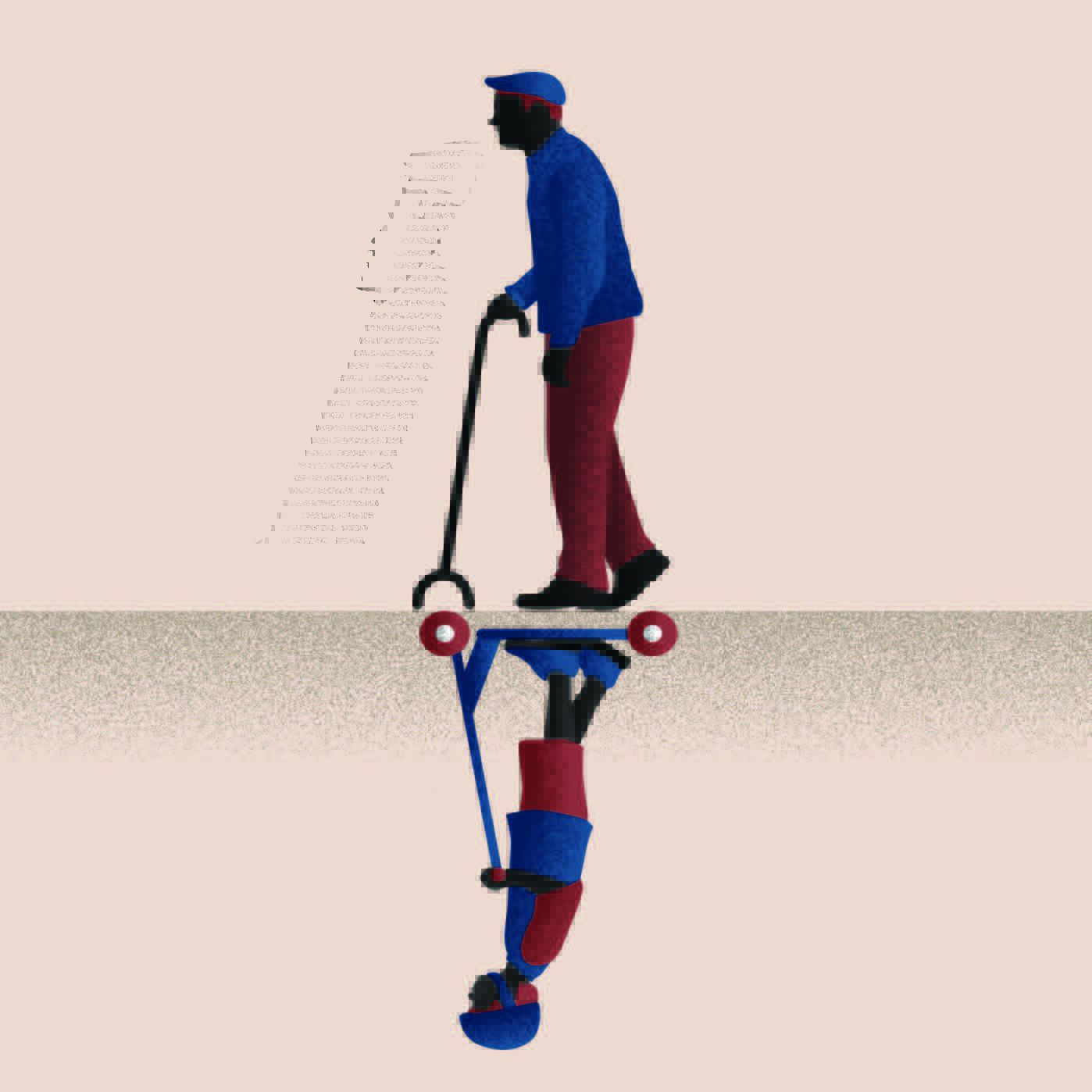
One of the paper’s more counterintuitive results involves body size. The data shows that, in younger animals, larger, faster-growing individuals have worse survival odds. In older animals, the relationship reverses. Being bigger, or at least maintaining body mass, becomes protective.
For young males, the dynamic makes evolutionary sense seen through the lens of competition. A male mouse that invests bioenergetic resources in growing large and aggressive may dominate reproductively at 200 days. But burning through metabolic machinery appears to accelerate biological aging. He wins early; he pays later. A slower-growing male who doesn’t dominate reproductively may outlive him by years.
“Do you want to be a big, mean male mouse who dies at the equivalent of age 50,” Williams asks, “or a slow-growing male who maybe doesn’t reproduce at all but lives to 80 or 90?”
The flip in old age, where body mass becomes protective, carries a direct and practical message for human health. Rapid, unintentional weight loss in the elderly is one of the clearest biological warning signs across species. An older animal losing weight is an animal running out of reserves.
“If you get to about 70 years,” Williams says, “you don’t want to go on any crash diets. If anything, you might even gain a little weight so that you can get through influenza or COVID.”
25,000 Tails in a Refrigerator
The research would never have been possible without what Williams describes as stumbling onto a gold mine.
In 2014, he learned of a program operated by the National Institute on Aging, the Interventions Testing Program, which had been running since 2004. Its mission was to test whether various dietary compounds and drugs could extend lifespan in mice. Over two decades, the program generated roughly 1,000 mice per year, tracked them from birth to death, and preserved tiny DNA samples from each animal’s tail.
When Williams discovered that these samples still existed, he asked if he could have them. The answer was yes.
What he had was extraordinary: tissue samples from roughly 25,000 related mice, a family of siblings, with complete lifespan data for every individual. It’s the kind of dataset that delights geneticists. The siblings share known genetic backgrounds, controlled diets, and documented environments. Researchers knew exactly what each animal ate, where it lived and how long it survived for up to 1,400 days—the equivalent in mouse biology of roughly 100 human years.
To date, his team has genotyped approximately 7,200 of those samples. The Nature paper represents what 7,200 mice can reveal. When all 25,000 are analyzed, Williams thinks the findings will be even more definitive.
What This Means for Medicine
Williams doesn’t overpromise. Translating findings from mice to humans is never straightforward. The genetic architecture of human aging—shaped by more complex environments and life histories—will require its own maps.
But the directional implications remain significant. The VITA loci his team has identified are not abstract curiosities. They point toward biological processes: mitochondrial function, DNA repair mechanisms associated with cancer, metabolic regulation.
“If we can understand what they are doing,” Williams says, “we can possibly leverage them and say, OK, if we play with that gene variant, maybe we can get you to live five years more or 10 years more.”

In Williams’ view, more important than extending lifespan is extending health span, the period of life spent in good health. The goal is not simply to add years but to compress what he calls the morbidity stage, the slow, painful decline that characterizes the worst endings. He invokes Alzheimer’s disease as the scenario to be avoided: not death but 20 years of diminishing life. The aspiration is what he calls a compression of morbidity—a long, healthy life followed by a relatively swift ending rather than a prolonged, debilitating one.
“We want to find interventions that will keep you healthy longer,” he says. “And then when you fall off the cliff—and we all are going to fall off the cliff—let’s hope you go quickly instead of taking 20 years.”
Personalized genomics remain years away from human application. Several compounds have shown robust, reproducible lifespan-extending effects in mice. Williams says they have influenced his own daily habits.
A 40-Year Career Converging
Williams has been at UT Health Sciences for nearly four decades. He arrived studying developmental neurobiology, the biology of how embryos build brains. Now, approaching the later chapters of his own career, he studies how those brains and the bodies around them age and decline.
“I think the drift of my career has been thematically balanced in terms of changing as I go,” he says.
The Nature paper was not quick work. The dataset has been in his hands for over a decade. The analysis required a team spanning genetics, statistics, computer science and evolutionary biology.
Some of the team members urged him to publish what they had and move on. Williams refused. He thought the work would be a classic.
“If you went back 20 or 30 years and looked at all of aging research, perhaps five or 10 papers really made a difference,” he says. “Looking ahead, this paper is going to be one of those top few.”
His reasoning relies not on braggadocio but on methodology. The paper demonstrates a new way of looking at aging that others can apply. It shows that mortality is not a single genetic phenomenon but a sequence of them, age-structured and sex-specific, each mappable and potentially modifiable.
The next phase of his research will push toward human application: identifying which interventions—pharmaceutical, dietary, behavioral—can improve health span across those specific genetic and demographic profiles his team has begun to map.
And, somewhere in a freezer in Memphis, 17,000 more mouse tails are waiting.