Everyone has a different reason for choosing a career path. Mine began with my father’s stroke when I was in the eighth grade.
I still remember the moment my world fell apart. One instant changed everything; my strong, dependable father was suddenly vulnerable, unable to move as he once had. In those early days of fear and uncertainty, it was his neurologist who gave our family hope. With clarity, compassion and confidence, he explained what was happening and what might come next. At a time when we felt utterly powerless, that doctor became our anchor. Watching him care for my father ignited something within me, a quiet but enduring desire to provide hope and support to others in similar situations.
That seed grew into a calling. Neurology is not an easy field. It demands patience, humility and comfort with uncertainty. For me, neurology has always been about more than the brain. It is about restoring dignity, preserving identity and being there for patients and their families during their most difficult times.
Today, I feel an even greater responsibility to bring the next generation along. The need could not be more urgent. One in seven people in the United States lives with a neurological disease or disorder. Yet fewer than 3 percent of graduating U.S. medical students choose neurology, a proportion that has remained unchanged for years. Recent reports highlight 20 states as “dementia neurology deserts,” with fewer than 10 neurologists per 10,000 people with dementia. Tennessee is one of them, underscoring the critical need for our collective action.
This is not an abstract statistic. It represents real patients waiting months for care, families traveling hours for appointments and diagnoses made too late to change outcomes.
Research consistently shows that early exposure, longitudinal guidance and passionate mentorship are key to attracting young people into neurology. To inspire the next generation and address this growing shortage, our vision at UT Health Science Center has evolved. We are focused on training and retaining—creating a strong pipeline that introduces neurology to students as early as high school, continues through college and extends into medical school. Our goal is simple and deeply rooted: train Tennesseans to treat Tennesseans.
The future of neurology gives me hope. We are entering a transformative era marked by AI-driven diagnostics, gene and molecular therapies, brain-computer interfaces and advanced neuroimaging. These advances promise earlier diagnoses and more precise, disease-modifying treatments. At the same time, basic science researchers continue to ask fundamental questions about the brain—curiosity that is essential to tackling devastating diseases like Alzheimer’s and stroke.
I chose neurology because of my father. I stay because of my patients. And I teach because the future of this field and the health of Tennessee depend on those whom we inspire next.
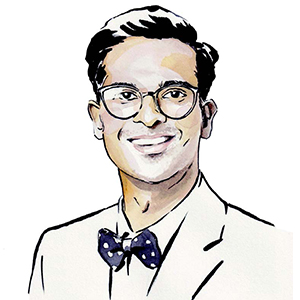
Dr. Balaji Krishnaiah is the UTHSC Division Chief of Stroke and Vascular Neurology, Program Director of the Neurology Residency, Vice Chair of Education and Associate Professor in the Department of Neurology. He is known for having an infectious passion for neurology that he hopes to spread through education outreach and advocacy.