As the world begins to move at quantum speed, across the University of Tennessee System researchers don’t just dream of its possibilities: They work to make them reality.
Quantum science studies how matter behaves at the smallest scales—down to atoms and particles that make up the universe. By harnessing unique behaviors, researchers hope to build faster computers capable of designing new materials and medicines, communication networks protected against cyberattacks and ultrasensitive sensors capable of detecting phenomena previously beyond the reach of science.
“Many companies recognize quantum’s potential, but they’re still figuring out what it means for their businesses,” UT Chattanooga Interim Vice Chancellor for Research Mina Sartipi says. “Our role is to bridge the gap between research and industry by helping companies understand where quantum can create value while preparing the workforce they’ll need to adopt these technologies.”
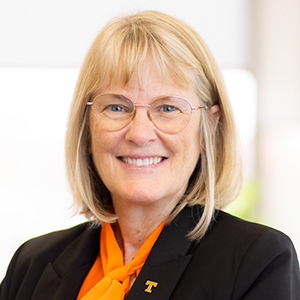
Deb Crawford, UT Knoxville vice chancellor for research, innovation and economic development, says quantum technologies will be tools to underpin everything from healthcare and energy to national defense.
“At UT Knoxville, we’re focused on turning quantum science into practical capabilities like stronger protection for digital information, faster discovery of new medicines and materials, and sensors that can help monitor infrastructure and the environment more safely and accurately,” she says. “This research is ultimately about improving quality of life while preparing a workforce that can lead in a rapidly changing economy.”
Going Quantum in Chattanooga
UT Chattanooga joined the quantum race in 2022 when it made a $3 million investment to establish its initiative. Its dividends continue to arrive. During the past four years, that investment has attracted nearly $14 million in external grants and awards to accelerate research and workforce development, a return of nearly $5 for every $1 invested.
That strategic investment, and the external funding it attracted, led to the creation of the UTC Quantum Center in late 2024, transforming an ambitious vision into a hub for research, education and workforce development.

“UTC entered into the quantum space strategically,” Sartipi says. “We were intentional about making that investment when we did. We saw an opportunity to build on Chattanooga’s strengths by creating the talent pipeline and research capacity needed for this emerging field.”
The university cultivated partnerships with national laboratories, industry leaders and government organizations to create an ecosystem where research, education and commercialization could advance together. This approach attracted collaborators including Deloitte, EPB (Chattanooga’s utility company), IonQ, Los Alamos National Laboratory and Oak Ridge National Laboratory (ORNL), among others.
In 2023, UTC connected to the EPB Quantum Network, becoming the first U.S. university to host a permanent connection to a commercially available quantum network. The connection provided by the node on campus gives researchers and students the ability to conduct experiments on real-world infrastructure rather than in a simulated environment.
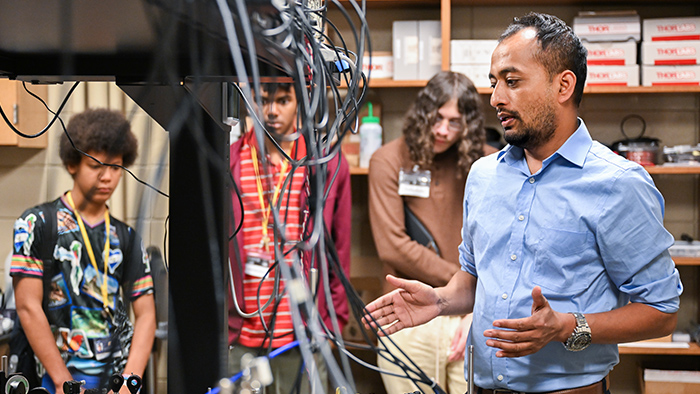
“When EPB began developing its quantum network, we recognized an opportunity to build something that would set Chattanooga apart,” Sartipi says. “That partnership has been foundational to our growth. Today, the UTC Quantum Center brings together approximately 25 undergraduate and graduate students, postdoctoral researchers and faculty members working across quantum networking, sensing, simulation and algorithms. Access to real-world quantum infrastructure has strengthened our research, helped us attract outstanding faculty and students, and created opportunities that very few universities can offer.”
Rick Mukherjee, Quantum Center director, says the center’s rapid growth reflects the field’s pace and UTC’s commitment to preparing students while tackling some of quantum science’s most significant challenges.
“Quantum is advancing at an extraordinary pace,” Mukherjee says, “and the rapid growth of the UTC Quantum Center reflects our commitment to preparing the next generation while advancing research that addresses some of the field’s most important challenges.”
UTC’s node on EPB’s quantum network allows researchers to conduct experiments that would be impossible at most universities.
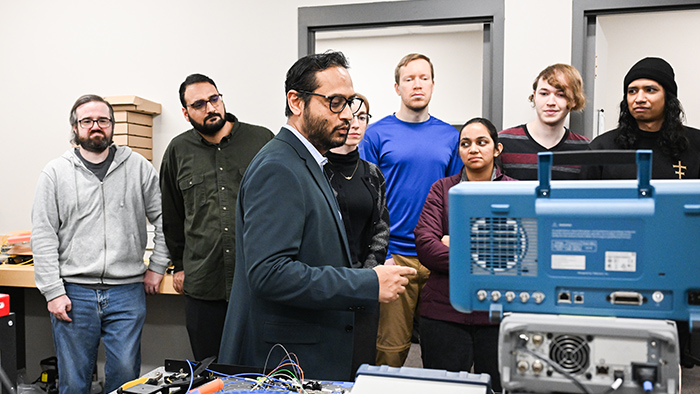
“We belong to a unique class of universities that have access to a commercial quantum network with the opportunity to perform world-class research, paving the way for applications such as quantum internet, quantum cybersecurity and distributed quantum computing,” Mukherjee says.
While much of the work begins in the laboratory, the goal is practical applications. UTC researchers work with industry partners to explore how quantum technologies can solve complex problems in healthcare, logistics, energy and financial services.
“We’re committed to serving Chattanooga’s industry first, then expanding our reach to companies across Tennessee as we grow our impact,” Mukherjee says. “Our goal is to solve optimization problems where quantum can create meaningful advantages.”
Delivering that requires people with the skills to build, deploy and apply quantum technologies. Workforce development has become a defining priority of the UTC Quantum Center.
UTC also works to prepare students at every stage for careers in quantum through K-12 outreach and teacher training to undergraduate certificates and future doctoral programs. Leaders plan to offer a quantum doctoral program in 2027.
Going Quantum in Knoxville
In May, UT Knoxville announced the launch of its Knoxville Quantum Accelerator, also known as K-Quantum, as its initiative to accelerate quantum discovery, workforce development and commercialization across Tennessee.
Though quantum computing often dominates headlines, researchers say it represents just one part of the scientific landscape. Progress depends on advances in quantum hardware, the algorithms that power it and the quantum materials that make the technology possible.
“If you want to harness quantum mechanics, you first have to understand the materials that exhibit those behaviors,” says Adrian Del Maestro, UT Knoxville professor and head of the Department of Physics and Astronomy.
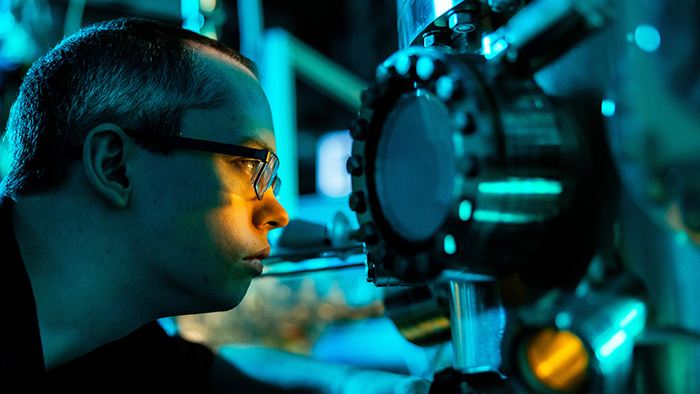
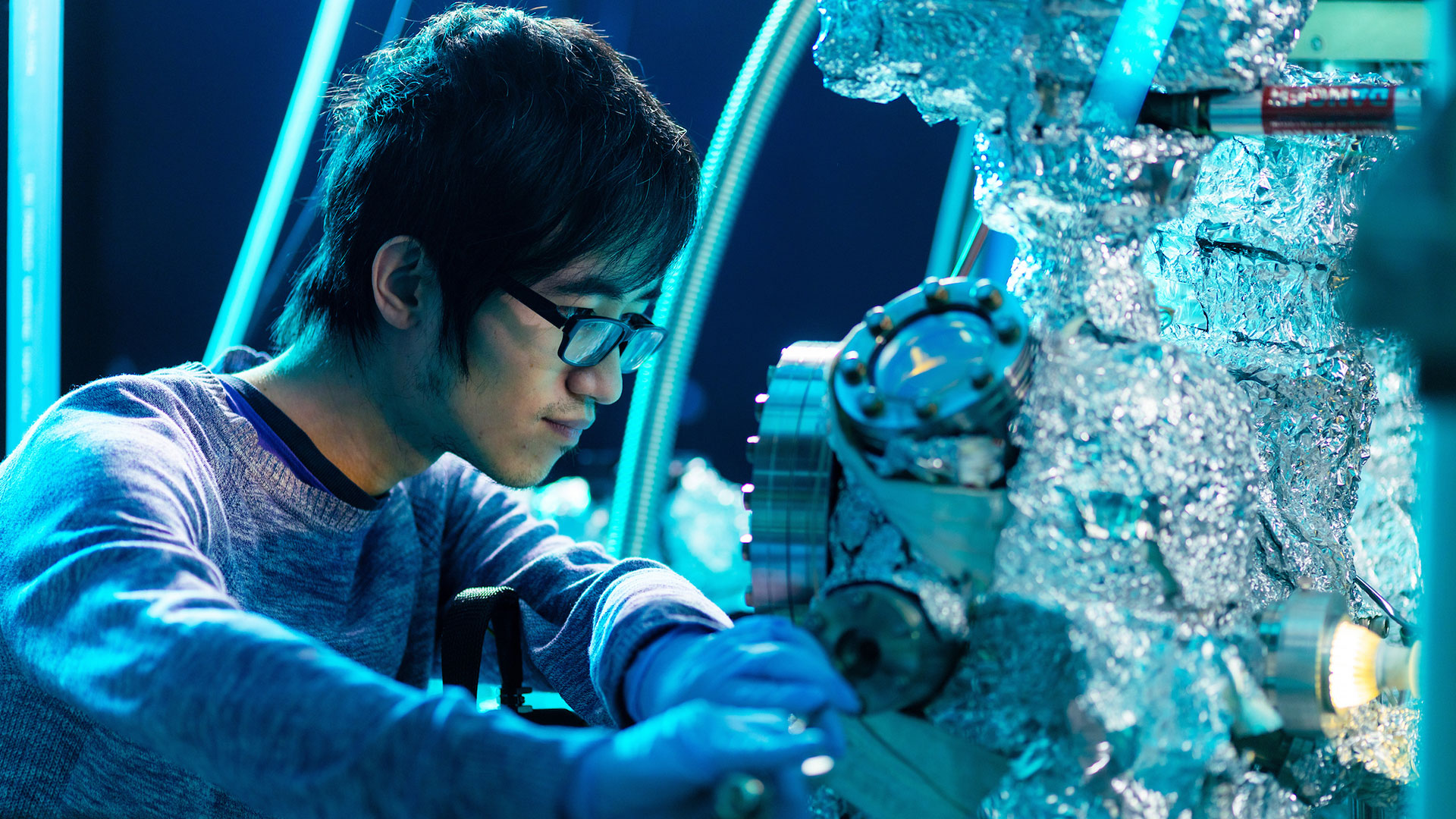
At UTK, scientists investigate the atomic-scale properties that form the foundation of future quantum technologies. Through its partnership with ORNL, faculty and students gain access to its world-renowned facilities. At ORNL’s Spallation Neutron Source, for example, researchers can probe quantum materials with beams of neutrons that reveal how atoms and electrons behave. Those insights help scientists discover and design materials capable of enabling future quantum technologies. Building more powerful quantum computers is only part of the challenge. Researchers also must determine which scientific questions those machines will answer.
For Rebekah Herrman, UTK assistant professor in the Department of Industrial and Systems Engineering, that means developing quantum algorithms for optimization, simulation and machine learning problems that could eventually outperform today’s most powerful supercomputers. Her research explores how quantum computers could one day tackle complex challenges—from optimizing transportation and supply chains to simulating molecules for drug discovery and designing advanced materials—that would be impossible for conventional computers to solve.
“We’re trying to identify the problems where quantum computers can make a meaningful difference rather than simply doing what classical computers already do,” Herrman says.
Answering those questions requires physicists, mathematicians, engineers, chemists and computer scientists working together across disciplines. At ORNL, researchers work alongside scientists at the U.S. Department of Energy’s Quantum Science Center—one of five national quantum information science research centers in the country.
“The combination we have here is extraordinary,” says Alan Tennant, professor of physics and materials science in UTK’s Department of Physics and Astronomy and director of the Shull Wollan Center. “World-leading neutron science, supercomputing, AI, quantum materials expertise and national laboratory partnerships all come together in one place to tackle scientific challenges that are beyond the reach of conventional computing approaches.”
That collaborative environment extends across campus as well. UT Knoxville’s Center for Advanced Materials and Manufacturing, one of only 15 centers of its kind funded by the National Science Foundation, brings together researchers from across disciplines to accelerate discoveries using artificial intelligence. Machine learning helps scientists identify promising quantum materials, analyze massive experimental datasets and improve simulations, while advances in quantum computing could one day accelerate AI itself.
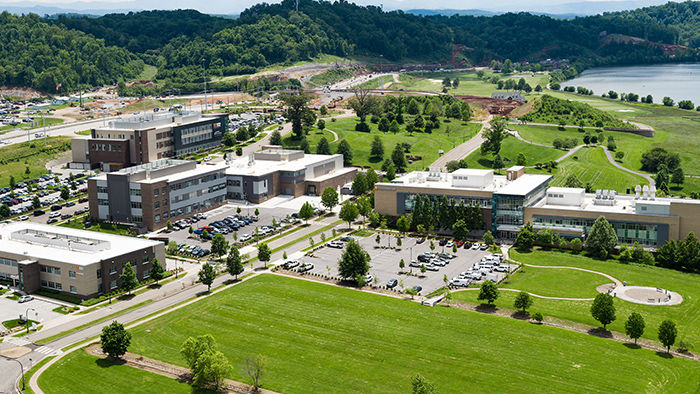
“The future isn’t one technology replacing another,” Del Maestro says. “It’s bringing together quantum computing, AI, materials science and experimental science to solve problems we couldn’t solve before, from discovering new quantum materials to designing next-generation technologies.”
Scientific discovery is only part of what it takes to advance innovation. By working to develop projects, including the Maplehurst Innovation District and the Quantum Foundry, to be located in UT Research Park at Cherokee Farm, UT Knoxville is building the infrastructure needed to move quantum technologies from the laboratory to industry. Both facilities are expected to be completed by 2030.
The Next Generation
Jackson Ricketts, who received a bachelor’s degree in physics from UTC in 2024 and participated in the Quantum Information Science and Technology (QIST) Certificate coursework, now works as a quantum systems engineer at EPB. He supports many of the quantum experiments he participated in as a student.
“It helped me get a baseline knowledge of quantum information science,” Ricketts says. “Combined with my practical experience in the defense sector and my physics research in undergrad, it made me a much stronger candidate for quantum jobs.”
As Tennessee continues to invest in quantum research and infrastructure while educating the next generation, UTK and UTC shape the state’s future, helping it take a quantum leap forward.