Mudit Rana knew the class he planned to take during his last semester at UT Southern would be a challenge.
But he had studied with the professor before and enjoyed the class. So he enrolled in Undergraduate Research Methods in Human Performance and Physical Education taught by Associate Professor Michael Cathey.
As an elective.
“He is a great mentor for me,” says Rana, who graduated in May 2025 and is now pursuing a master’s in human cognitive neuropsychology at the University of Edinburgh. “He really helped me understand the whole research process.”
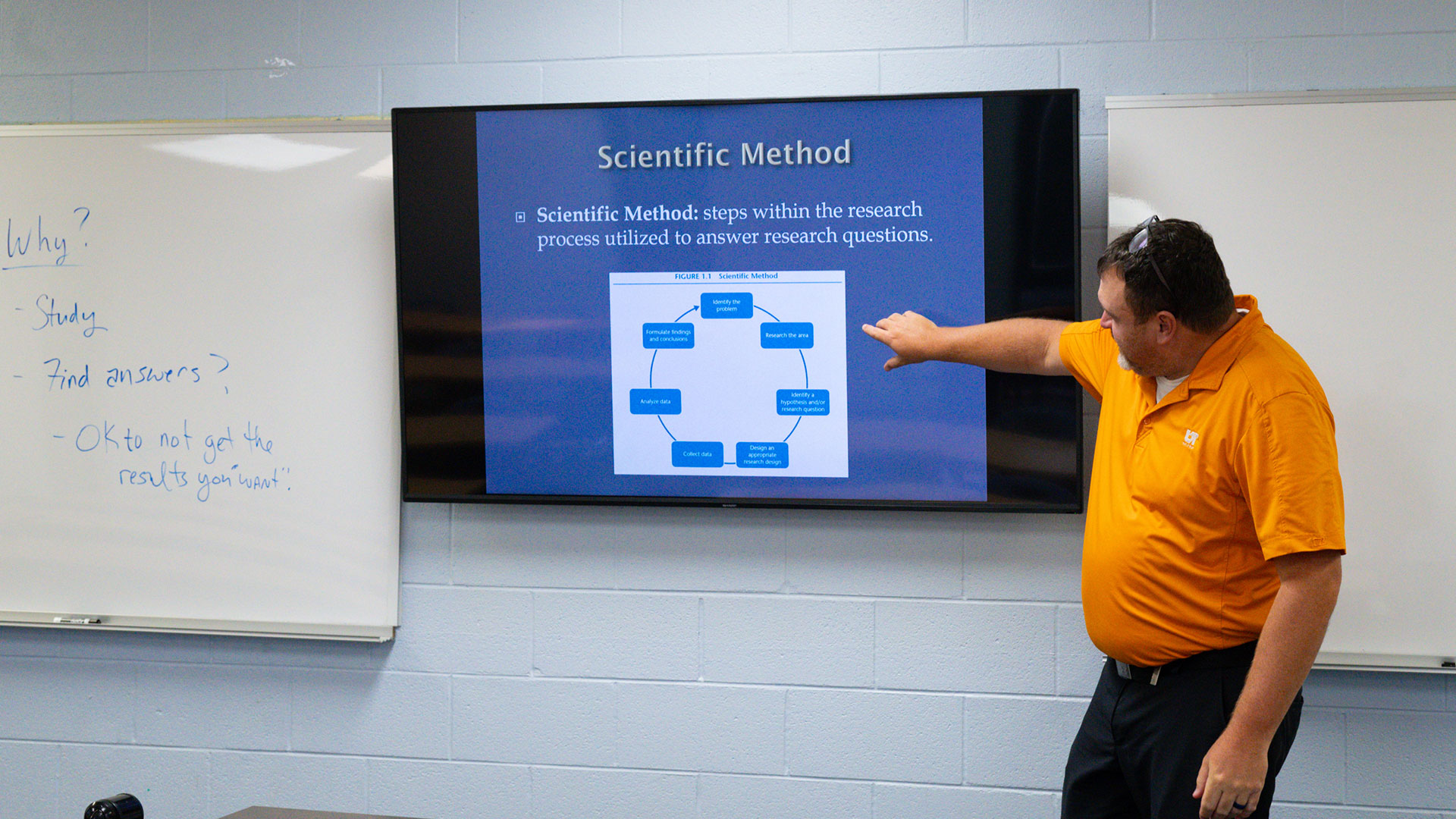
The class—required for all human performance and physical education majors, who are mostly athletes—has grown in popularity. It used to be offered only in the fall semester, but after more than 30 students wanted to enroll, UTS began offering it in the spring as well. Cathey takes the students through the scientific process as they conduct their own research, from formulating a hypothesis to presenting posters of their findings.
Rana, from New Delhi, India, who played golf for UT Southern, analyzed the cognitive flexibility between athletes and nonathletes. It involved reviewing literature, receiving permission from the Institutional Review Board since his research would involve human subjects, recruiting participants, adapting a game that pushed the participants’ cognition, conducting the study and writing the paper. By the end of the class, he had a 30-plus-page paper showing findings different than he expected.
“Going in, I thought, firstly, athletes would be cognitively flexible in comparison to nonathletes, just because of how dynamic their situations are,” Rana says. “I didn’t find any data that could support my hypothesis because the results were too insignificant.”
That answer is just fine with Cathey.
“I try to explain to them, your hypothesis may mean something, but it may not. You may find out, hey, this doesn’t work,” he says. “That’s OK because that’s the answer. You can write that. I say, ‘You’re not wrong. You just found out your hypothesis wasn’t correct, and that’s OK.’”
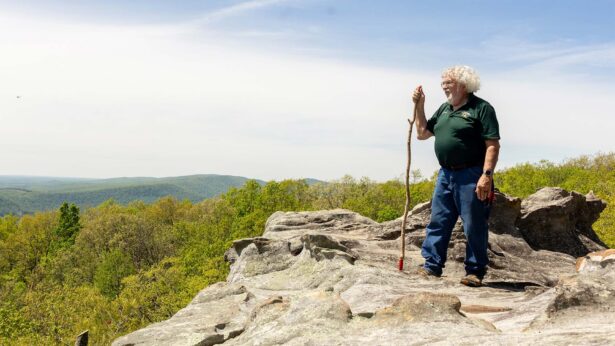
As a first-generation college student who played football for UT Knoxville as a walk-on until a knee injury ended his athletic career, Cathey remembers not grasping research until he attended graduate school. He wants his students to understand the why behind research as well as conduct it.
“The whole purpose of college, in my opinion, is to learn to ask questions. It isn’t necessarily a bad thing to ask questions and say, ‘Why is this important?'”
—Michael Cathey
“We’re the college of opportunity at UT Southern,” he says.
He knows not all of his students will become researchers, but through conducting their own studies, he thinks they will become better professionals.
In his class, he tries to demystify research and the steps students must take to find answers to their questions.
“This class isn’t to solve any major problems. This is to learn how to do the process,” he says. “When they get into grad school, it can help them do that. Maybe one of the students turns into a major researcher one day, and that would be awesome.”
But Cathey also thinks the class has another role.
“The whole purpose of college, in my opinion, is to learn to ask questions,” he says. “It isn’t necessarily a bad thing to ask questions and say, ‘Why is this important?’”
For Rana, who plans to focus on research, he also found the class gave him other skills beyond academic ones. He learned how to approach people to convince them to participate in his research. He also found he could write longer papers than he thought.
“This class really pushes you in more ways than you can imagine,” he says.