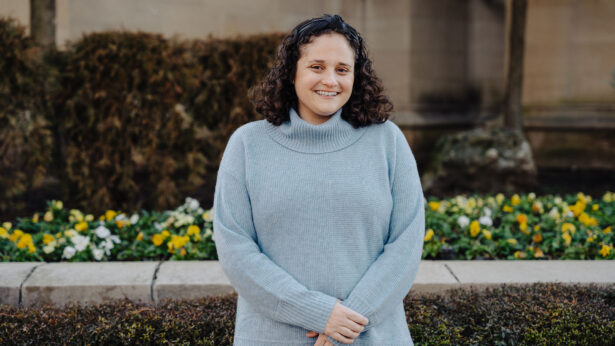
Growing up in a small, rural town in Flat Rock, Alabama, Kaylen Hamlen saw that needs weren’t always met when it came to health care.
“A lot of older members of my community would always have to find people to take them to the doctor,” says Hamlen, a senior nursing student at UTC. “I feel like that prohibited proper care for them because some of their family members were either busy with work or didn’t have time to take off.”
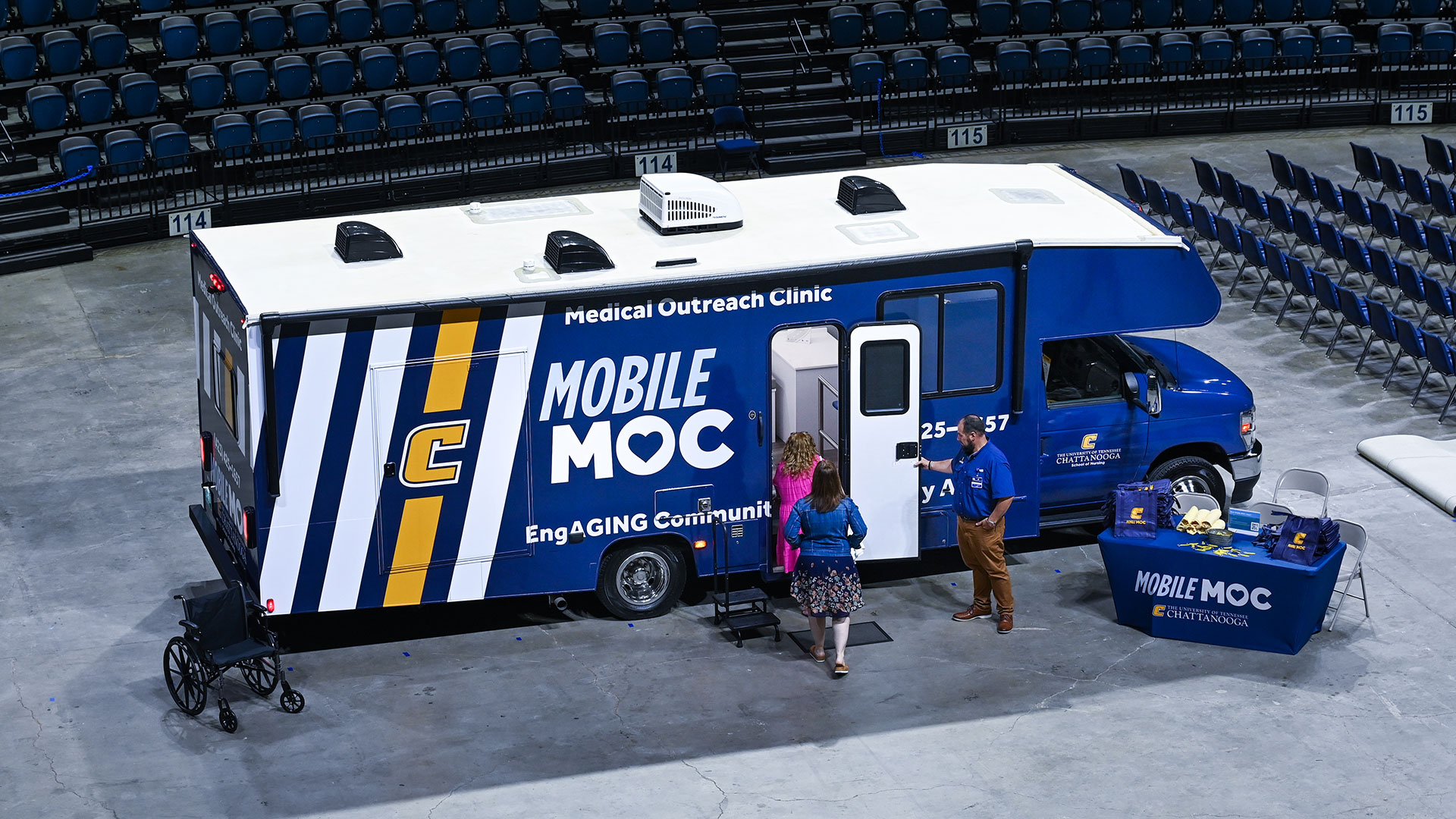
When she heard about UTC’s MobileMOC outreach health clinic on wheels, she saw it as a way to help create positive change.
“Being from a small rural community, I thought it would be a great idea to go out to other smaller communities that are underserved just to see how that makes a big impact on the community members there,” Hamlen says.
MobileMOC is designed to provide health care access for older adults in rural communities, offering services such as preventive care, screenings, chronic disease management and social services. The clinic currently provides care for underserved areas in Bledsoe, Bradley, Grundy, Hamilton, Marion, McMinn, Meigs, Polk, Rhea and Sequatchie counties.
Leading the overall effort is UC Foundation Assistant Professor and Vicky B. Gregg Chair in Gerontology Kristi Wick. She sees MobileMOC serving two purposes: providing care to older adults in rural areas and giving students an opportunity to learn.
“Bringing care to older adults and caregivers who are in rural communities is our mission, hands down,” Wick says. “There’s a workforce shortage in many of these areas—some counties have zero to three primary care providers—so part of our role at UTC is to expose students to the community. We want them to see what it’s like to practice in a rural atmosphere and realize that’s an option for them, too.”
The mission struck a chord with Hamlen, who worked at the Whitwell (Tennessee) Senior Center—where she helped conduct fall and balance tests, vision screenings and lab assessments.
“I actually saw the need that those people had,” she says. “A lot of them didn’t have transportation, so it made it easier. And a lot of them said, ‘I can walk here to meet you guys.’”
The experience, she says, helped her imagine the kind of nurse she wants to become.
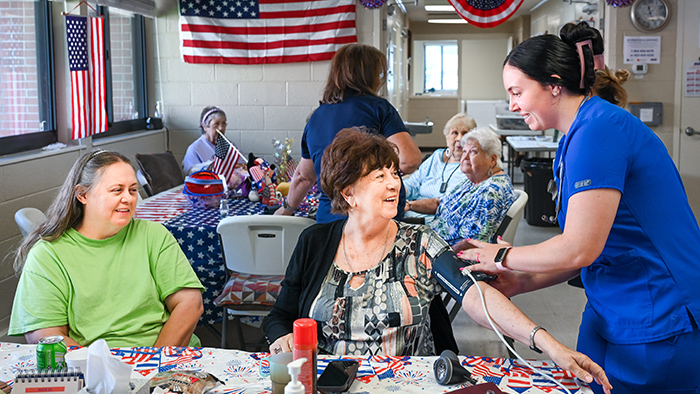
“I definitely plan to come back to a rural community to be a nurse practitioner,” she says. “It’s helped me see what people’s day-to-day lives are like when they don’t have access to health care or transportation.”
While Hamlen is gaining experience in community care, Kaitlyn Notto is bringing years of it with her. A registered nurse at CHI Memorial in Chattanooga since 2019, Notto is now completing UTC’s Doctor of Nursing Practice program with a family nurse practitioner concentration.
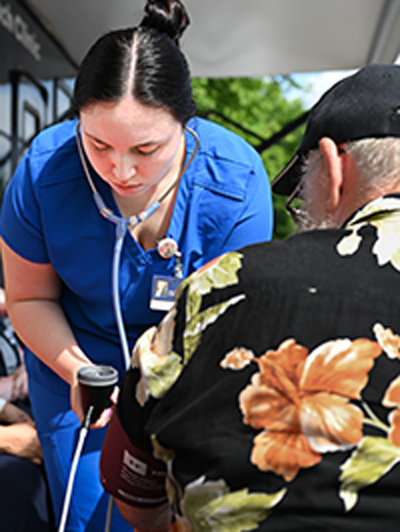
At a MobileMOC health fair in Dayton, she helped patients check their blood sugar and cholesterol levels and talked with them about their diets and daily routines. Notto, who works primarily with older adults, says the experience felt more personal, like caring for a family member rather than working in a hospital setting.
“We all have this need to help our community and help those who can’t help themselves,” she says. “MobileMOC is directed toward rural areas with access issues, and I think it’s a fabulous idea.”
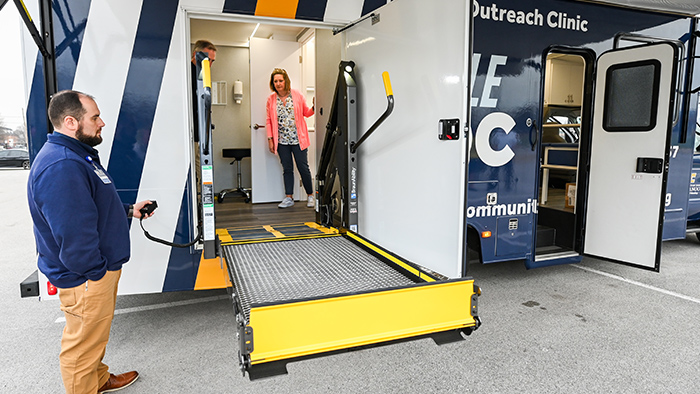
She recalls being a “baby nurse,” as she described it, and how the experience could have helped her as an undergraduate nursing student.
“I was terrified to ask patients questions and just do simple tasks like getting their blood pressure,” Notto says. “It’s good for them to get that exposure.”
Since its launch in spring 2025, MobileMOC has become a multidisciplinary hub where students can learn alongside one another. Recently, medical students from the UT Health Science Center College of Medicine-Chattanooga have boarded the MobileMOC bus. UTC’s team includes students in nursing, social work, nutrition, music therapy and occupational therapy.
Arden Perry, a senior social work major, volunteered after hearing about the opportunity from Cathy Scott, an associate professor in UTC’s Department of Social Work. Perry assists with emotional and cognitive assessments, including a patient health questionnaire and a geriatric depression scale.
“Although I want to be a school social worker, I still want to be fully versed in social work,” Perry says. “I want to be able to work with all clients, no matter their age.”
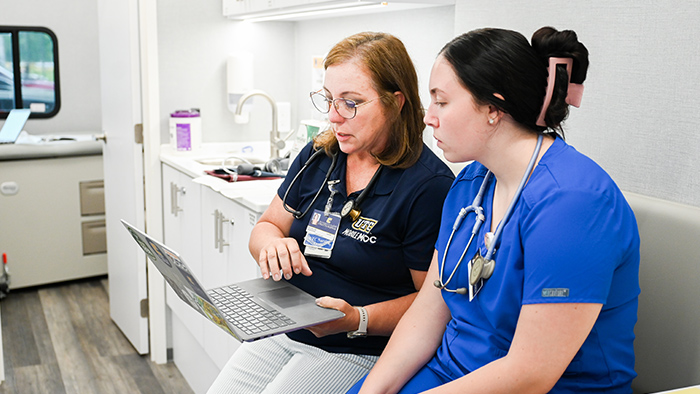
As an undergraduate, she says having a program like MobileMOC makes her proud to be part of UTC’s social work community.
“As social work students, we learn about the community and how we can help,” she says. “It’s amazing that people don’t have to go anywhere; this comes to them. It’s such a great opportunity for students across different departments to work together and help people wherever they are.”
Nutrition student Jamie Stout, a first-year student in UTC’s Master of Public Health: Nutrition and Dietetics program, says MobileMOC gave her a chance to step outside the classroom and talk directly with people about their health. She met with older adults to complete nutrition assessments and ask about their daily habits and routines.
“It’s a great opportunity to learn how people from different communities and ages live and how they look at nutrition,” Stout says.
For Iqra Sheikh (Chattanooga ’20, ’22), a first-year occupational therapy doctoral student, the experience offered a chance to collaborate with her peers.
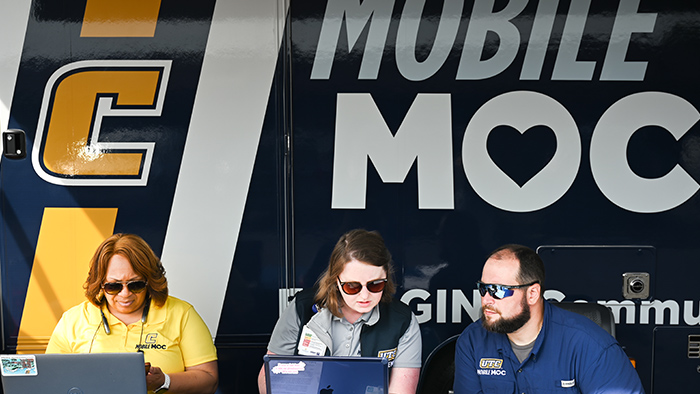
“In our classes, we are told that there’s so much collaboration in our field,” Sheikh says. “Whether with physical therapy, nursing, social work … this is seeing it in person rather than just talking about it in class.”
Wick says that kind of teamwork is where the deepest learning happens.
“It’s not in a classroom. It’s out in the community doing the service,” Wick says. “They learn their own professions, but then we bump it up a notch by showing them what it’s like to work together. It’s really the highest level of education we can give to somebody.”