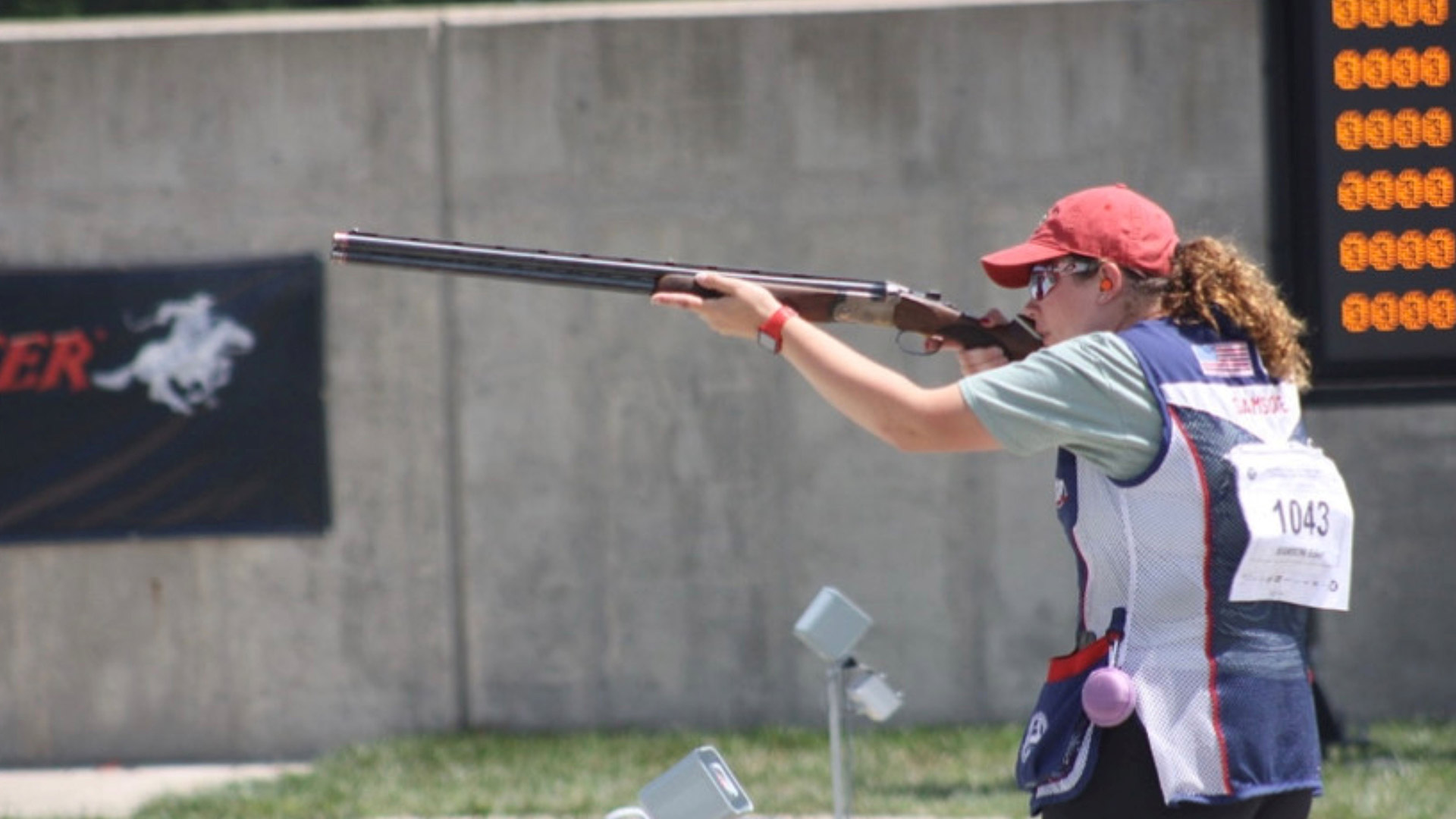
Whether sport shooting or teaching special education students, Eden Samson knows one rule holds true: Every target requires a unique approach.
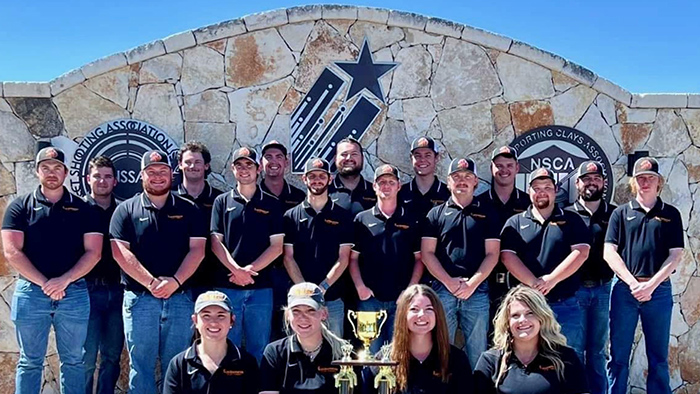
Samson graduated from UT Southern in December 2024 with a degree in elementary and special education. While there, she won a spot on the Junior Team USA in 2021 and helped the college shooting team win national championships in 2021 and 2022.
As different as clay target shooting and classroom teaching may seem, Samson says she draws on the discipline and mental acuity needed for the sport to help her teach elementary school students with various special needs in her Alaska classroom.
In shooting, “Once you get the mechanics down and the physicality, you are competing mentally,” Samson says. “Not every approach to the target is the same—just as not every approach in special education is the same.”
‘You’ve Found Your Sport’
Samson grew up near Wasilla, the fourth largest city in Alaska, about 45 miles north of Anchorage.
Her parents, both from North Dakota, honeymooned in Alaska and never left. Now Samson, the youngest of their three children, doesn’t see herself leaving, either.
The Alaskan countryside, Samson says, “is like a painting,” and residents enjoy a special closeness. The Last Frontier is a nature lover’s playground: hiking, snowmachining, ice fishing in the winter and ocean fishing all summer.
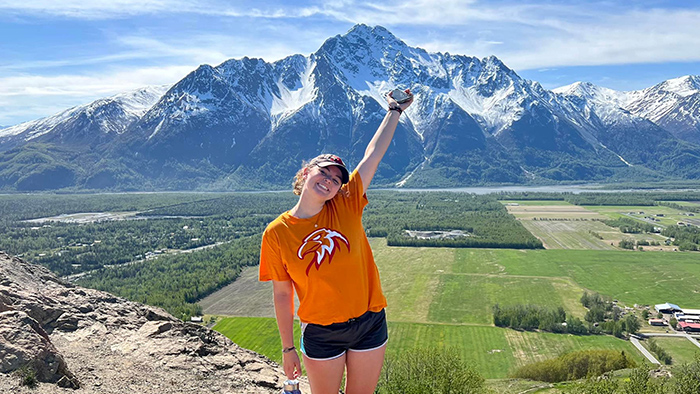
“I loved my experience in Tennessee, but locals say, if you were born and raised in Alaska, you are unfit to live anywhere else,” she says. “I want my kids to grow up here.”
While in the eighth grade, Samson accompanied her older brother to high school shooting practice. The coach urged her to try it. She did so well, the coach exclaimed, “I think you’ve found your sport.”
Samson quickly became a winning shooter. During high school, she traveled to various states to compete in the Association of College Unions International competition and claimed the High Overall Lady title several times.
Midway through high school, Samson met Chad Whittenburg, former UT Southern shooting coach, when he taught a shooting class in Wasilla.
“We really connected,” she says.
Whittenburg signed Samson to compete for UT Southern in 2019. Whittenburg, who has since left coaching, says Samson flourished in Pulaski.
How Shooters Use the Brain
Experts say all clay target shooting demands intense focus, visualization and emotional control. It is both a left-brain and right-brain sport.
Using the left-brain function, shooters anticipate where the target will go and strategize how they’ll hit it based on skills they’ve honed. But, once the target is launched, right-brain function takes over; shooters must quickly execute practiced techniques without overthinking their actions.
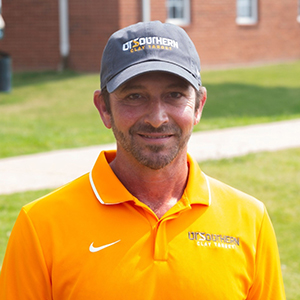
Former UT Southern shooting coach Chad Whittenburg says he took Eden Samson and her teammates through the same mental training he used when he was head coach of the Certified Olympic Training Center in Nashville.
“The mental aspect of the game is paramount to achieve the success we had,” he says.
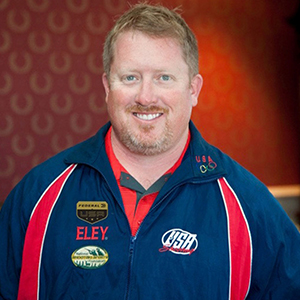
Michael Williams, current UT Southern shooting teams head coach, says shooters also must use their brainpower to tamp down emotions at critical moments.
“Any leftover emotions or second thoughts of a previous station mistake can snowball and affect their upcoming target execution. They must stay in the present through each game. I want them to take the games one target, one station, one box at a time.”
“She approached both her athletic responsibilities and her academic work with uncommon seriousness, committing herself to constant improvement through disciplined training and rigorous mental-skills development,” he says. “That mental resilience became the foundation of her success as one of the most accomplished female athletes to compete for our national championship team.”
For Samson, attending college in Tennessee was a wish come true.
“As a kid growing up, we never really traveled much outside of Alaska,” she says. “It was always a dream of mine to live in Tennessee.”
Another wish came true when she chose education as her career. Samson says she’s wanted to be a teacher since age 5 when she saw how her kindergarten teacher created a bright, colorful classroom and “made the terrifying start of going to school not terrifying at all. She made everyone feel like school was a safe place.”
Finding Her Southern Roots
Although moving to Pulaski was definitely a culture shock, Samson credits UT Southern Special Education Program Coordinator Claire Paul with helping her adjust.
“She made transitioning from high school to college and moving from Alaska to Tennessee very smooth,” Samson says. “She was a friendly face, always there to talk.”
Paul remembers Samson as “an incredible student and an even better human being.
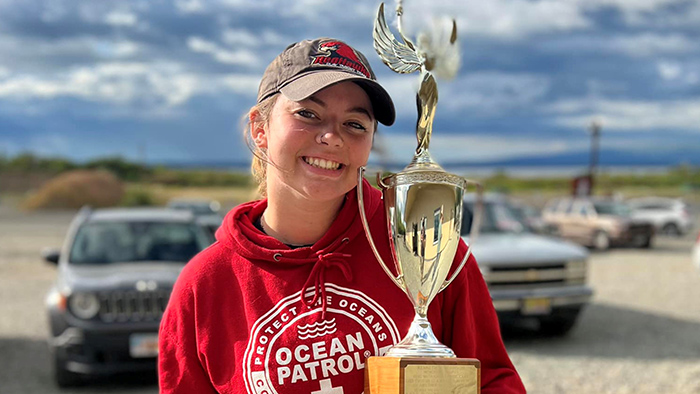
“Eden is kind and compassionate to those around her. Her background in clay target shooting translates well into the classroom; she is not easily rattled, and she makes sound decisions on her feet.”
Paul recalls observing Samson student teaching in a middle school classroom.
“She handled a classroom full of middle school boys who were all needing differentiated instruction like a seasoned teacher. She was no-nonsense with them, but it was easy to see that she had created connections that made them feel safe and loved; she had earned their respect.”
Paul says several Giles County schools wanted Samson to stay after doing her student teaching.
“I selfishly wished for that, too,” Paul says. “But Eden came here with a plan—to return to Alaska.”
Sights on Teaching
After graduating, Samson moved back home and began working at a third- through fifth-grade school near Wasilla. She teaches in a program called RISE: Reaching Independence through Structured Environment.
“A lot of my teaching is not academic, but it’s life skills,” Samson says. “Students may come from foster homes or have abandonment backgrounds. You have to take a gentle approach. If someone can’t grasp the emotion they’re feeling, it might be a result of a traumatic experience they had.”
For now, Samson says, her career has taken precedence over clay target shooting.
“I do shoot occasionally, but I don’t do the Olympic trials or shooting meets outside Alaska.”
But she still loves the sport, and when she sets her sights on the future, she sees herself teaching—in the classroom but maybe also on the shooting range.
“People have told me I’d be a good shooting coach,” she says.
Shooting Sports Require Brain power
Trap, skeet and sporting clays are three popular shooting sports. While their mechanics differ, each requires physical and mental prowess.
In trap, which originated in the 1800s as practice for bird hunting, shooters attempt to hit clay targets that are machine-launched into the air at various angles from a fixed spot. Each round consists of 25 shots, five shots from each of five different points on a half-moon shaped field.
In skeet, created by a grouse hunter in the 1920s, two target-launching machines are placed about 44 yards apart at different heights. Shooters must try to hit clay targets that are launched simultaneously and cross each other. A standard round consists of 25 shots, usually fired from eight different stations.
Sporting clays, sometimes referred to as “shotgun golf,” takes place along a scenic course. Varying terrain and random clay target launches simulate real-life bird hunting. A standard round consists of 50 to 100 targets across 10 to 15 different stations.