


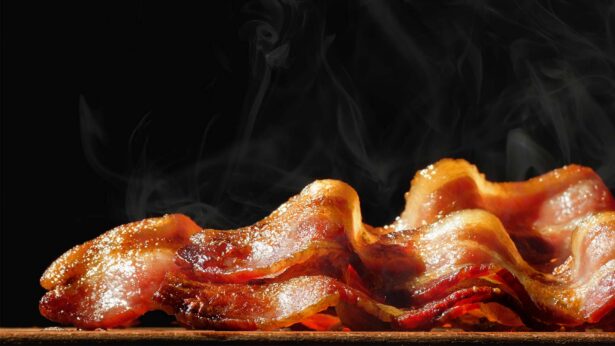

In 2013, Mark Johnson stashed away a picture of a maple bacon doughnut for a future project he had in mind.
Around this time, bacon began its renaissance.
Yes, it had remained a breakfast staple, but it also made its way into desserts, cocktails, salads, sandwiches and bacon-wrapped versions of just about anything.
“It was like, ‘Oh, a little treat?’” says Johnson, a UT Chattanooga assistant professor of history. “This little half strip of bacon garnishing my old-fashioned. If we’re already sinning or doing something that’s bad for us, might as well go for it.”
In his new book, American Bacon: The History of a Food Phenomenon, Johnson explores the food’s complicated history. Bacon’s story goes back centuries, and it wasn’t always something people celebrated.
For most of American history, bacon remained a practical meat, used to stretch ingredients to make meals last longer. In the South, enslaved people and later sharecroppers used small amounts of bacon or pork fat to flavor dishes.
Long before that, pork carried mixed meanings. Several religious traditions restricted it, which changed how much of the modern world viewed it.
The story really kicks off, Johnson said, in early-modern Britain, when a pork taboo emerged among “city people and wealthier people.”
“The English really valued their orderly, beautiful, fenced farms as a symbol of their civility and their respectability,” Johnson says, “and pigs just don’t fit in that.”
When English colonists arrived in North America, those ideas came with them. The reality, however, didn’t match what they had left behind. Raising hogs required less labor, as pigs foraged across fields and forests for their own meals.
“They’re trying to be proper English people,” Johnson says, “but pigs are taking off (in popularity).”

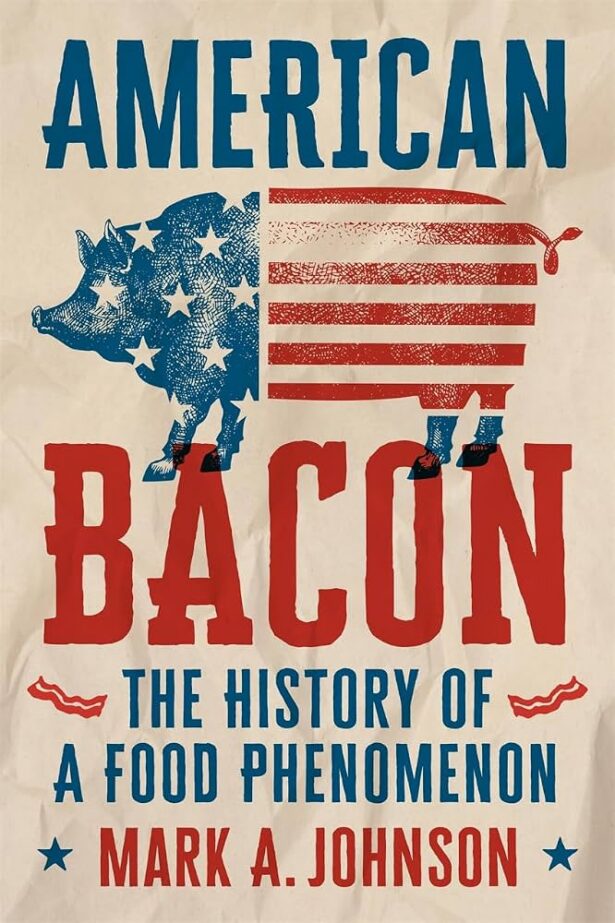
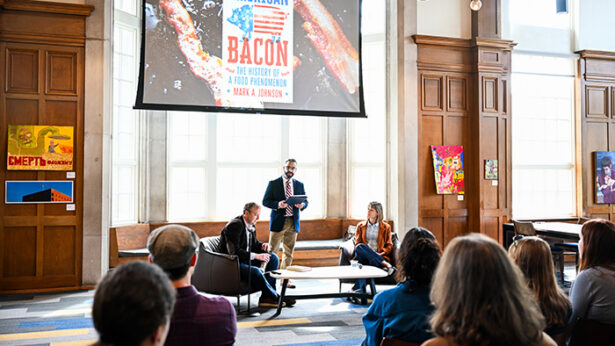
Click to Expand Images
Bacon quickly became embedded in American diets, even as its reputation changed depending on who was eating it. Johnson’s book follows those perceptions over time. Europeans viewed Americans as “bacon-eating people,” or uncouth. In the United States, that label shifted to the South, then to poorer white communities and to enslaved and formerly enslaved people.
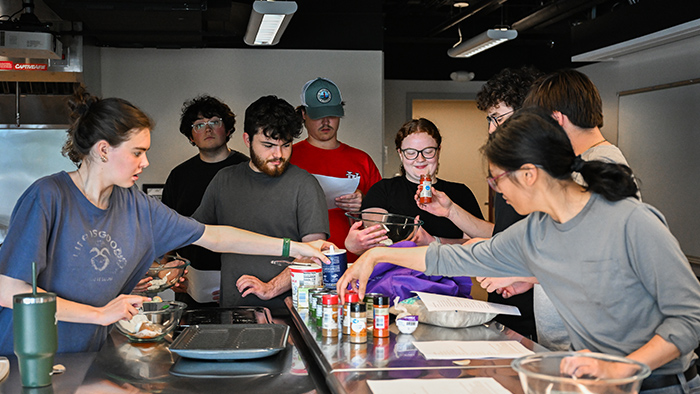
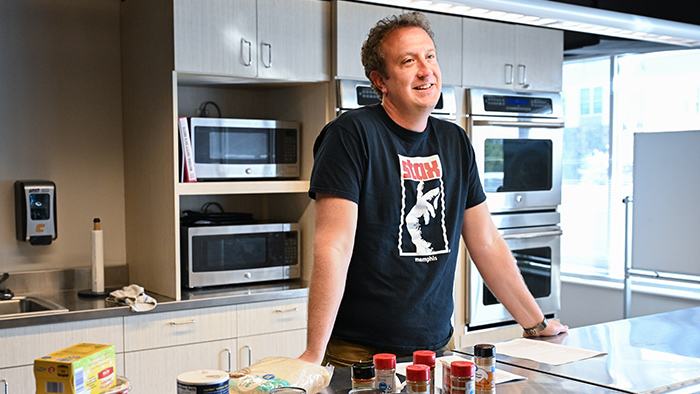
This perception eventually shifted, which is something Johnson encourages students to analyze in his Food and Southern History class. He also teaches them how to cure bacon.
“I wanted to do something in class so they could get hands-on experience,” he says. “What would it have been like to the best of our ability back then? What would it have looked like and felt like and tasted like? … And how does industrialization, commodification and mass production change it?”
American Bacon answers this question. In the 20th century, refrigeration and shifting diets changed how Americans thought about food.
By the late 1900s, bacon started to disappear from everyday meals. Concerns about fat, sodium and chemicals pushed it out of people’s diets.
The Food and Drug Administration almost banned it.
Then, bacon came back.
“The argument in the book is that bacon had to die in a way,” Johnson says. “It had to be destroyed in the American imagination as a staple, and then it was reinvented for its associations with hedonism and decadence and doing things you don’t usually do.”
That trend gained momentum in the 1990s and early 2000s when diet fads turned to meat, even if bacon didn’t necessarily fit the health guidelines.
“The Atkins diet in the ’90s kind of gave it a jumpstart, but 2000 seems to be a pretty good starting point for the bacon obsession,” he says.
At the same time, people grew frustrated with constantly changing health advice.

“People are kind of fed up with this,” Johnson says. “It’s like one day this is good for you, and the next day it’s bad for you.”
In this cultural recipe, bacon found a new role. It wasn’t something to eat every day but occasionally.
Cooks also adapted pre-cooked bacon to a culture of ease, especially in fast food.
“Bacon has benefited from our obsession with convenience,” Johnson says. “They can add it for next to nothing to a sandwich and raise the price.”
Its role at home didn’t completely disappear.
“People like the ritual of making the bacon and slowing down,” he says. “In a way, it reminds us—even if the time and place only exists in our imagination—of a time when people slowed down and appreciated their food and sat together.
“It found its way back into Saturday morning breakfast.”
In 2013, Johnson first laid eyes on a bacon-covered doughnut while working on his previous book, An Irresistible History of Alabama Barbecue: From Wood Pit to White Sauce, published in 2017.
It wasn’t until he arrived at UTC in 2019 that he started American Bacon.
“I was able to finally get back into academia and had the resources—and the library—to go to archives,” he says.
Johnson studied the food’s layered history, from religion and labor to marketing and modern diets, understanding it as part of the same story. It fit well into his curriculum.
“I can teach some real and sometimes hard history,” Johnson says, “but bacon is a way to help you learn how we’ve thought about race and diet and gender and body image and health and wellness … that’s why it’s titled the way it is.”
Ultimately, the history book is not about food, he says.
“It’s really a story of the United States and how bacon gets all tied up in it.”
Try this Historic Bacon Recipe Yourself
Before Frederick Law Olmsted designed New York’s Central Park and other famous urban landscapes, he worked as a journalist and reformer with an interest in the southern slave economy. During the 1850s, he made a series of trips to the slave states to report on the region. Upon arrival, he remarked in his journal, “I made the first practical acquaintance with what shortly was to be the bane of my life, viz. corn-bread and bacon. I partook innocent and unsuspicious of these dishes…without a thought that for the next six months I should actually see nothing else.”
By the 1850s, northern urbanites had started to benefit from technologies and infrastructure that allowed more-varied diets, so they looked at the bacon-heavy diets of all southerners as a sign of the region’s cultural and economic backwardness. When Olmsted viewed the South, he viewed it through the lens of his own region’s industrialization.
They pointed to crackling bread as one particularly backward, humble, meager meal. They fried their fatty bacon in a cast iron skillet, removed the meaty bits and added them to their corn bread dough, and then added the dough to the skillet, per the recipe that follows.
Ingredients
- 2-3 slices of bacon
- ¼ cup butter, melted
- 1 ½ cups self-rising flour
- 1 cup yellow cornmeal
- 2 tbsp granulated sugar or honey
- ½ teaspoon salt
- 1 ½ cups buttermilk
- 2 large eggs, beaten
Steps
- Preheat oven to 400 degrees Fahrenheit;
- In a nine-inch cast iron skillet, fry the bacon until done, then remove the bacon and set aside leaving the bacon grease behind; keep skillet warm in pre-heating oven but do not let bacon grease smoke or burn;
- While the bacon cooks, whisk together the flour, cornmeal, sugar, and salt in a large bowl;
- In the bowl with the dry ingredients, add the melted butter, some of the bacon grease, buttermilk, eggs, and half crumbled bacon; whisk but do not overmix;
- Remove the skillet, pour the cornbread batter into the warm skillet, top with remaining half of the crumbled bacon, and return to the oven; bake for 18-20 minutes; cool for at least ten minutes but serve hot / warm.