


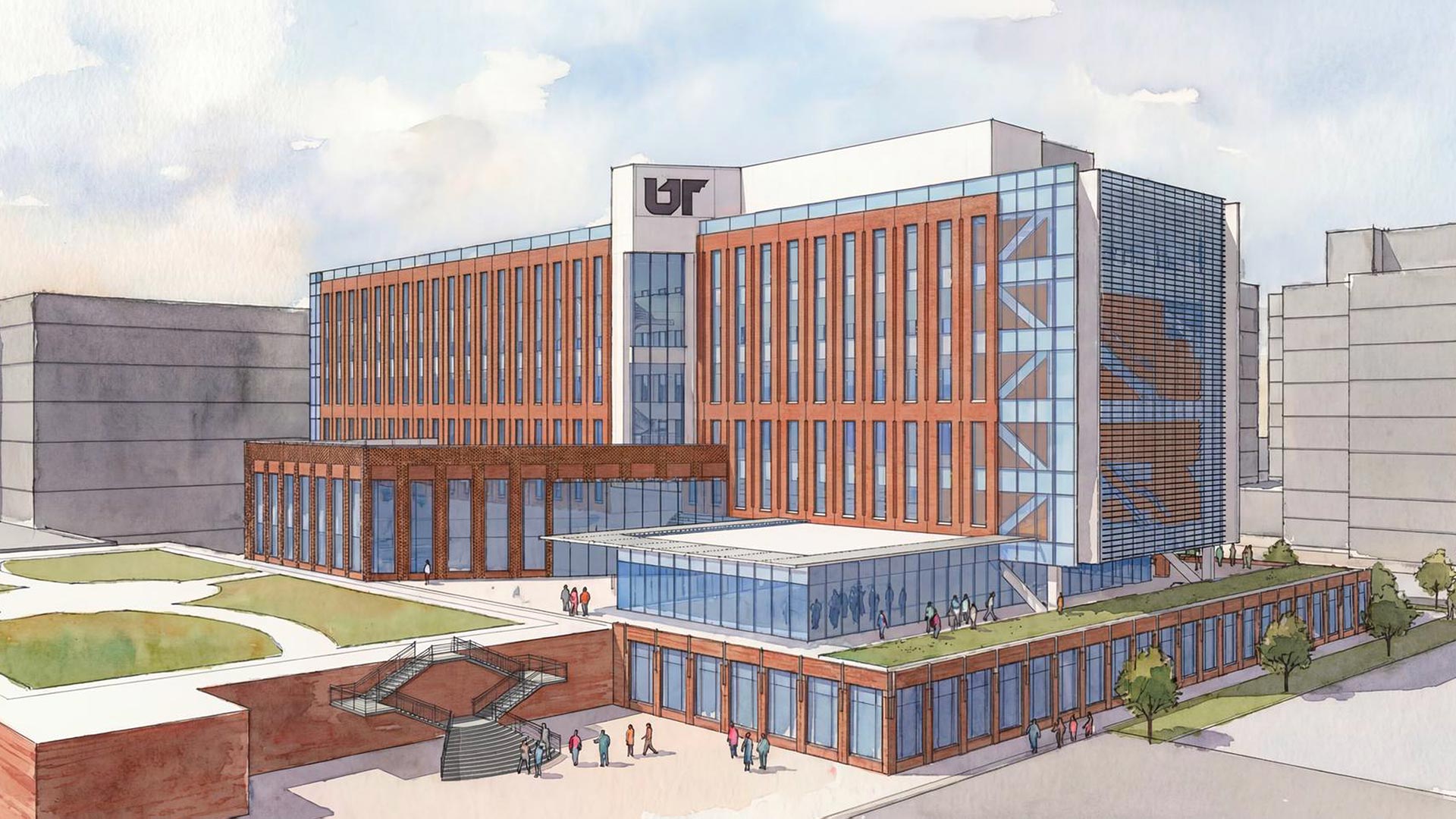
The Tennessee General Assembly approved $311 million, as recommended by Gov. Bill Lee, for construction of a new $350 million College of Medicine Interdisciplinary Building, the largest state-funded higher education capital project in Tennessee history.
“This is a transformative step for the UT Health Science Center, as well as for the health and health care of the people of Tennessee,” says Chancellor Peter Buckley.
The 300,000-square-foot building will allow the College of Medicine to grow its entering class from 175 to 250 students per cohort and expand the physician assistant program from 30 to 60 students annually. During its first five years of operation, the building is expected to help graduate an additional 1,450 health care professionals across multiple fields.
The university has begun a philanthropic campaign to raise $50 million to support the project, including $39 million toward building costs and additional funds for specialized equipment and programmatic needs.
“By 2030, we’ll have a shortage of 6,000 physicians in the state,” says College of Medicine Executive Dean Michael Hocker. “We have got to fill that pipeline.”
Construction is expected to begin in fall 2026, with substantial completion anticipated in 2029. View the student gratitude video.
Three Programs Earn Top 25 National Ranking Competition

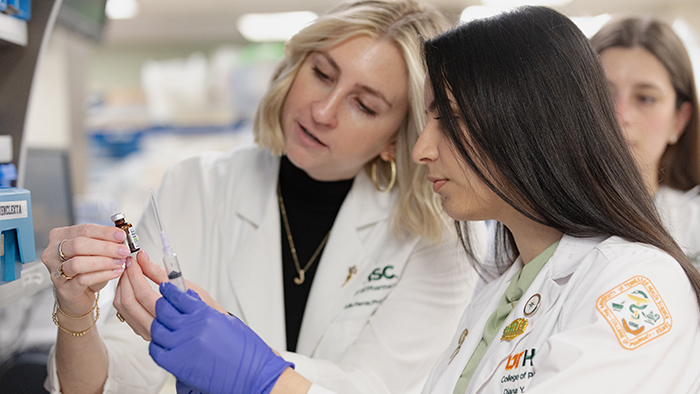
Three UT Health Science Center programs reached the top 25 of U.S. News & World Report’s 2026 Best Graduate Schools rankings. The College of Pharmacy climbed to No. 16 nationally, retaining its standing as Tennessee’s top pharmacy school and placing in the top 12 percent of 142 programs nationwide. The College of Health Professions’ doctor of audiology program rose five spots to No. 18, leading all public institutions in the state in its category. The College of Nursing’s doctor of nursing practice (DNP) program ranked No. 24 among all institutions and No. 10 among public universities, the highest of any public DNP program in Tennessee.
Mid-South Universities Form AI Research Consortium
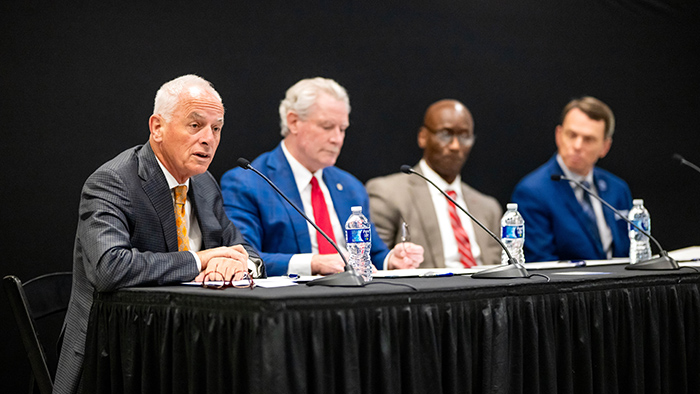
The UT Health Science Center joined the University of Arkansas, University of Memphis and University of Mississippi to launch the Mid-South AI Research Consortium. The four Carnegie R1 top-tier research institutions will pool high-performance computing resources and research expertise across five focus areas: rural and precision health, supply chain and logistics, energy and data centers, agriculture and food security, and national defense.
“The Mid-South has always had the talent and domain expertise to lead in applied innovation,” says UT Health Science Center Vice Chancellor for Research Jessica Snowden. “This is how we translate regional assets into national leadership.”