


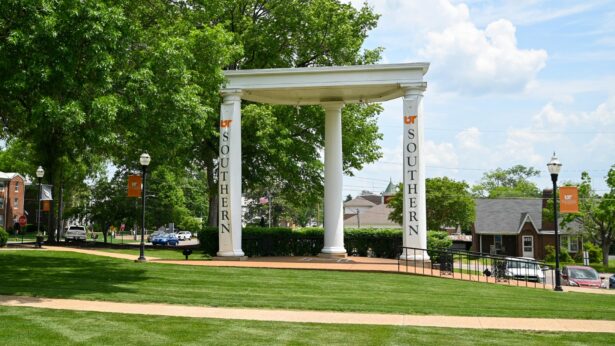
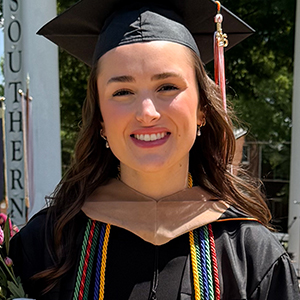
As a fifth grader in Trenton, Tennessee, Cali Whitwell (Southern ’24, ’26) met Katelyn Barker, then Gibson County’s 4-H representative, for the first time. More than a decade later, Barker worked in a senior marketing role at Holganix Midsouth, where Whitwell was in sales while finishing her studies.
“She was already like a mentor to me,” says Whitwell.
When she had to find a senior leader to shadow as part of a required assignment for the UT Southern MBA program, asking Barker (Martin ’13) felt natural. Whitwell had shown chickens at the county fair as a girl and saw Barker—who also operates a poultry farm—as having the ultimate countrygirl job.
Over several days, Whitwell sat in on meetings and calls with Holganix corporate leaders. After hours, she even helped corral chickens on Baker’s farm.
“It was a full-circle moment,” says Whitwell. “I wanted to be her. And then, years later, I got to actually walk in her shoes for a little while. That was special.”
That close look at leadership is the goal of Southern Shadow, a structured job-shadowing that’s part of UT Southern’s MBA leadership course. Students identify an executive host, then spend eight to 16 hours observing that leader. A reflective portfolio asks them to connect their observations to management theory, their own leadership skills and the careers they hope to build.

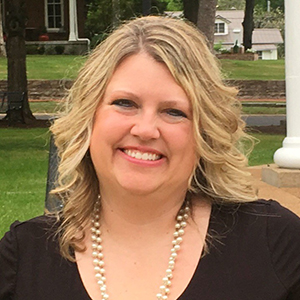
Lorie Jones, associate professor of business and MBA program coordinator, began the assignment in 2024 to bring the business world into the classroom. An undergraduate version allowed students to shadow a family member or supervisor. MBA students, many of whom work full time but have had limited exposure to executive decision-making, needed a different challenge.
“I kept asking myself: What can we do to give them that experience?” Jones says.
Southern Shadow is designed around Kolb’s Experiential Learning Cycle: students have a concrete experience, reflect on it, connect it to theory and consider how they will apply what they’ve learned. A study by Jones and colleague James Greene, accepted by the Experiential Learning Leadership Institute Journal, found the assignment strengthened leadership awareness, professional confidence and students’ ability to connect managerial theory with practice.
The assignment also can give students a clearer direction. Whitwell says observing Barker reinforced that marketing was not the path for her. She now works in finance for agricultural retailer Titan Ag. The experience, she says, and the self-assessments during the course, pushed her to become “more open-minded, less rigid, more spontaneous.”
For Jones, reflection is essential. Workplace dynamics—how leaders communicate under pressure, manage conflict and interact with their teams—can be discussed in class, but they cannot be fully understood there.
“You cannot teach trust-building in a classroom,” Jones says. “Students would come back and say, ‘You could just see how much respect those people had for the person I was shadowing.’”
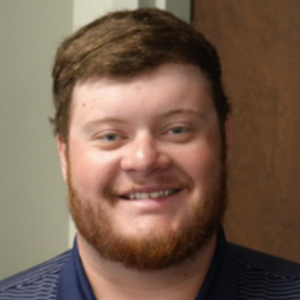
For 2024 MBA graduate Seth Ratliff (Southern ’23, ’24), Southern Shadow helped him launch his career. Ratliff shadowed a sales leader at Rogers Group. On visits to quarries and a call center, Ratliff saw up close how his host managed employees. That relationship led to an introduction to the company’s area vice president for construction. Ratliff was eventually accepted into the company’s two-year trainee program and now works in the company’s trucking department in Middle Tennessee.
“The connections I made in the MBA program and as an undergraduate, with professors and the people they know, were really important for starting my career,” Ratliff says. “In some areas, it’s not just what you know and who you are but also the network you form.”
Since Jones created the assignment, students have shadowed leaders at businesses, hospitals, school systems and other organizations across southern Middle Tennessee and north Alabama. Jones says executives have opened meetings, lunches and decision-making processes to students because they want to invest in the region’s future leaders.
“It has truly amazed me how willing our regional business community is to invest in these students,” Jones says. Several executives have followed up with a simple message: “Send students any time. We loved having them.”
Those partnerships give MBA students an up-close view of leadership—and a chance to consider how they might carry its lessons into their careers.
“Small rural institutions can create transformational experiences, too,” Jones says. “It just takes innovation, intentional design and community partnerships.”