



The first clues came as bookkeeping errors. Then came the blackout while driving to a tennis match.
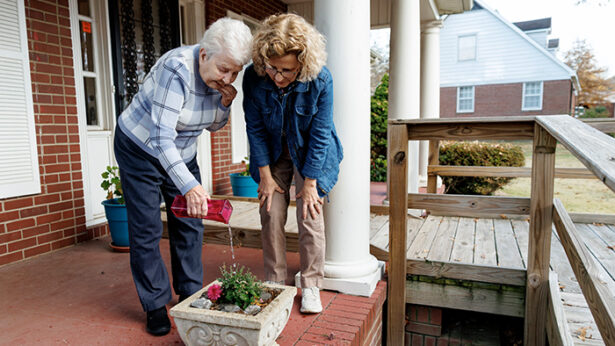
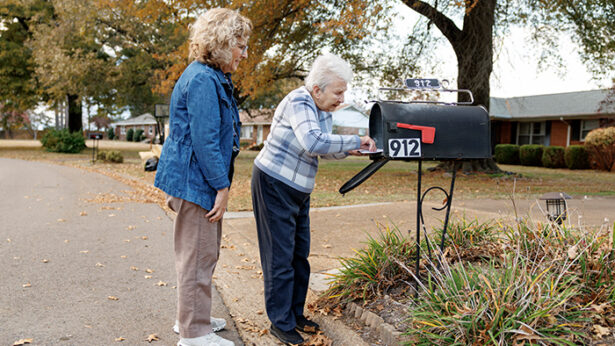
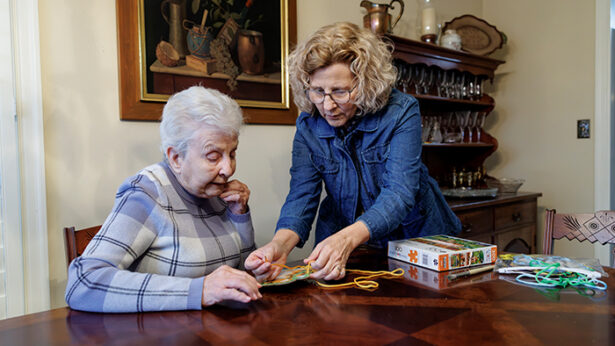
“At that point, she agreed that she did not need to drive anymore, and she needed to see a neurologist,” says Bonnie Daniel, UT Martin information technology specialist, about her mother, Margaret Vaughn.
After a battery of tests, doctors diagnosed Vaughn with Alzheimer’s disease, a form of dementia. Until then, Vaughn played tennis twice a week, participated in the Daughters of the American Revolution and volunteered at the hospital and her church.
Vaughn lives in Union City, while Daniel lives in Martin. Daniel’s brother lives in St. Louis, and her sister lives in Jackson, Mississippi. Daniel’s father also had kidney disease to manage.
“We knew we needed some extra help with meals and errands,” Daniel says.
They hired a day sitter, but Daniel would drive over to prepare dinner, take blood pressure and administer medication. She took her mother and father to doctors’ appointments and paid their bills. When her father died in 2023, they hired a night sitter.
Daniel still drives from Martin every night to help her mother, and her mother stays with Daniel and her husband most weekends. Her siblings take care of their mother one weekend in the month.
Almost 60 million people—about 1 in 6.5 adults in the United States—take care of an adult as a primary caregiver. Most of that care comes from spouses, adult children or other family members. Only 4 percent of people older than 65 in the U.S. live in a nursing home or assisted living, according to Keith Dooley, UT Martin chair of the Department of Family and Consumer Sciences and associate professor of gerontology.
“Usually, that is a spouse or adult child; typically, the oldest female child becomes the caregiver if the spouse is not available or in any condition to be a caregiver,” he says.
Click to Expand Images
Caregivers can become stressed, and prolonged stress can lead to burnout. They can become depressed, anxious, fatigued, irritable and withdraw from other relationships. Physically, caregivers have a higher risk for chronic diseases.
“If you’re under a lot of stress, your immune system becomes weakened, and caregivers may have a high risk for heart disease, obesity, arthritis or other conditions that are caused by weakened immunity,” he says.
Often caregivers neglect their own health by skipping medical appointments, not eating well or increasing their use of alcohol or tobacco.
“There’s a saying that a lot of people who study this use: ‘Self-care is not selfish,’” he says. “If we’re not careful when we’re caring for a loved one, we will neglect that self-care because we might consider it to be selfish not to be doing for the other person, whether that is a spouse or parent.”
To sustain a caregiver’s role, people have to take care of themselves, Dooley says.
“You have to take breaks; you have to keep your own life obligations and responsibilities, but you also have to be kind to yourself. The frustration, sadness and anger that we feel when someone we love is not doing well— those are normal feelings. It doesn’t make you a bad caregiver or mean that you’re doing a bad job, but you have to acknowledge that you can only do so much.”
Dooley suggests caregivers schedule activities for rest, relaxation and to ease stress. They should keep medical and dental appointments, eat well, get adequate sleep and exercise.
“If we don’t do that, we end up having our own set of health problems, and caregiving becomes that much more burdensome—maybe even ineffective in the long run,” Dooley says.
Being increasingly irritable or losing interest in activities are early signs that something should be changed.
“Don’t neglect being kind to yourself; acknowledge the amazing work that you do and remember that no one is perfect,” Dooley says. “You are not in control of every aspect of the health and well-being of the person you are caring for.”
Caregivers should learn to ask for help and build a support system so they can take a break when stress and frustration grow.
“A lot of people around us will ask, ‘What can I do to help?’ It’s a very generic question, and it’s not easy to answer in the moment,” Dooley says. “Oftentimes, caregivers will say, ‘I’m fine,’ even if they don’t mean it.”


Dooley suggests caregivers be ready with a short list of small- or medium-sized tasks.
“Instead of saying, ‘I need help, but I don’t know what I need,’ you can say, ‘Can you sit with Mom for two hours on Saturday so I can go to the gym?’ or ‘Could you pick up groceries on your way over to visit?’ Being very specific will allow you to give some of those things to other people.”
Others can help caregivers by following up on offers to help.
“Respite care—which is simply giving the caregiver a break to do something else, to get them out of the immediate caregiver setting and let them do something to relax or take care of other obligations—is one answer,” he says. “Easing the burden of the time that they spend and giving them a little respite from that role is important.”
Support groups can also be a resource. Dooley says there may not be many in rural areas, but they can be found through professional counselors, local mental health centers or places of worship.
“Support groups are a place to share experiences and to seek advice,” he says. “Possibly the most important thing is to get emotional support from people who understand your situation and are going through some of the same things you are.”
Daniel says she has found support that helps her remain strong for her mother and herself.
“In addition to my faith, my husband, George, and my UT Martin supervisor, Craig Ingram, have been very important to my ability to continue working and trying to maintain some degree of balance,” she says.
Finding Help
AARP, formerly known as the American Association of Retired Persons, provides many caregiver support resources for each state at states.aarp.org. Here are some of the resources listed for the state of Tennessee:
- Helping Family Caregivers: provides information about resources and support groups, respite care and more.
- Tennessee Caregiver Coalition: provides resources that enable caregivers to reclaim a little piece of themselves and restore balance to their lives and relationships.
- Aging Nutrition Program: provides meals, socialization and nutrition education and counseling to adults ages 60 and older.
- State Health Insurance Assistance System: provides counseling and assistance to Medicare-eligible people, families and caregivers, and helps residents understand health-care options, file claims and obtain benefits.
- Senior Housing Network: helps older adults find housing that will meet their current and future care needs, including home care or assisted living.
- Tennessee Home- and Community-Based Services: provides adults 60 and older and adults with physical disabilities with programs and services such as personal care and home-delivered meals.
- Senior Volunteer Transportation Network: assists adults 60 and older with essential rides in their communities, which are provided Monday through Friday with priority given to doctor appointments.